
Popular Searches
Popular Searches

Can a Sprinkler Irrigation System Maximize Wheat Crop Growth?
Wheat has been part of Indian farming for generations, filling fields across the country from Punjab to Madhya Pradesh. It’s a hardy crop, but it has its moods.
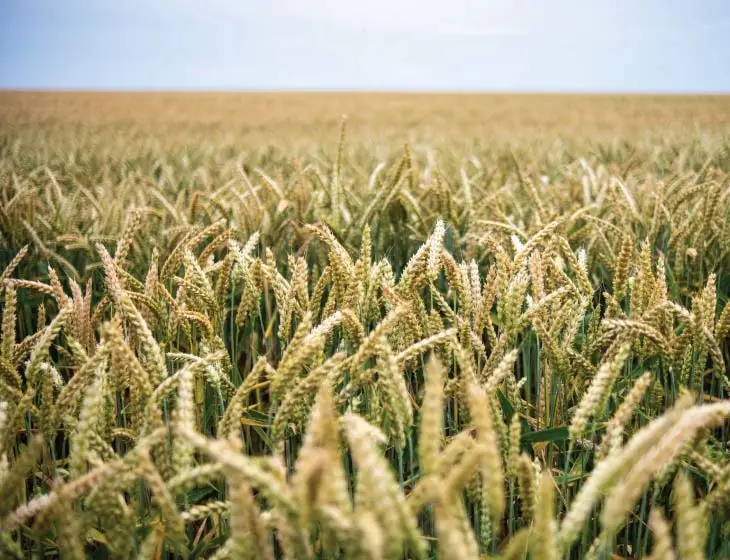
Wheat has been part of Indian farming for generations, filling fields across the country from Punjab to Madhya Pradesh. It’s a hardy crop, but it has its moods. Give it too much water early on, and it sulks; hold it back during flowering, and the grains won’t fill properly. Getting that balance right is what makes or breaks the harvest.
That’s where a sprinkler irrigation system makes such a big difference. Instead of letting water rush unevenly through the field, a sprinkler gives a calm, even shower, much like a slow rain. Every patch of soil gets its fair share, and nothing is wasted.
Why Wheat Depends on Smart Watering ?
Wheat might look simple to grow, but it reacts sharply to timing and moisture. Flooding the field can seem effective at first, but most farmers know what happens next. Some areas stay drenched while others dry out too quickly. That uneven watering not only wastes water but also weakens the crop.
Switching to a water sprinkler for agriculture solves this problem. A good sprinkler doesn’t flood the ground; it gives a soft, even shower that the soil can easily absorb. You won’t find water collecting in corners or drying up too fast. The field stays workable, and the roots hold better as the season goes on.
The Science Behind Sprinkler Irrigation
A sprinkler looks simple enough, but it does more than just spray water around. The water travels through pipes with a bit of pressure behind it, and the nozzle decides how far it goes and how evenly it spreads. Set it right, and the whole field gets watered without wasting a drop.
Good sprinklers don’t need a lot of pressure to do their job. They spread the water gently so the soil can take it in instead of letting it run off. That really helps crops like wheat, where the roots are shallow in the beginning and need even moisture to grow properly.
The best part is the control. With a sprinkler setup, a farmer can water only the areas that actually need it. Simple valves make it easy to divide the land into zones and avoid wasting water. Flood irrigation can’t really match that kind of precision.
Crops Suitable for Sprinkler Irrigation System
Wheat is one of the biggest winners when it comes to sprinkler irrigation, but it’s not alone. The crops suitable for this kind of system include maize, pulses, cotton, oilseeds, cumin, and a range of leafy vegetables. Even horticultural plantations benefit from the even spread of water.
The reason is simple. Sprinklers maintain consistent soil moisture, stop topsoil from washing away, and keep nutrients where they belong. For crops that don’t like extremes, this balance often shows up directly in better yields and healthier growth.
Matching the Right Sprinkler to the Field
No two farms are the same. Soil texture, slope, and wind can all change how a sprinkler performs. Choosing the best sprinkler for agriculture means finding one that fits both the field and the water source.
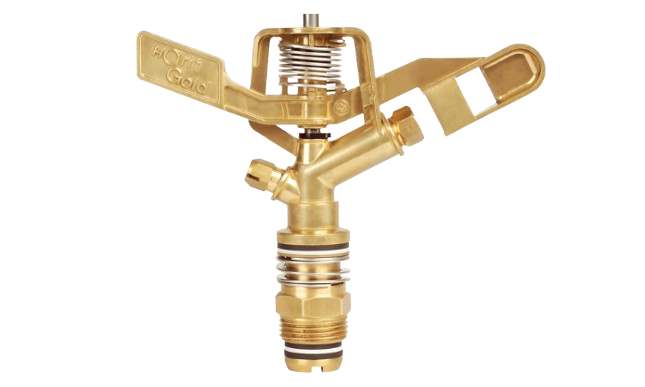
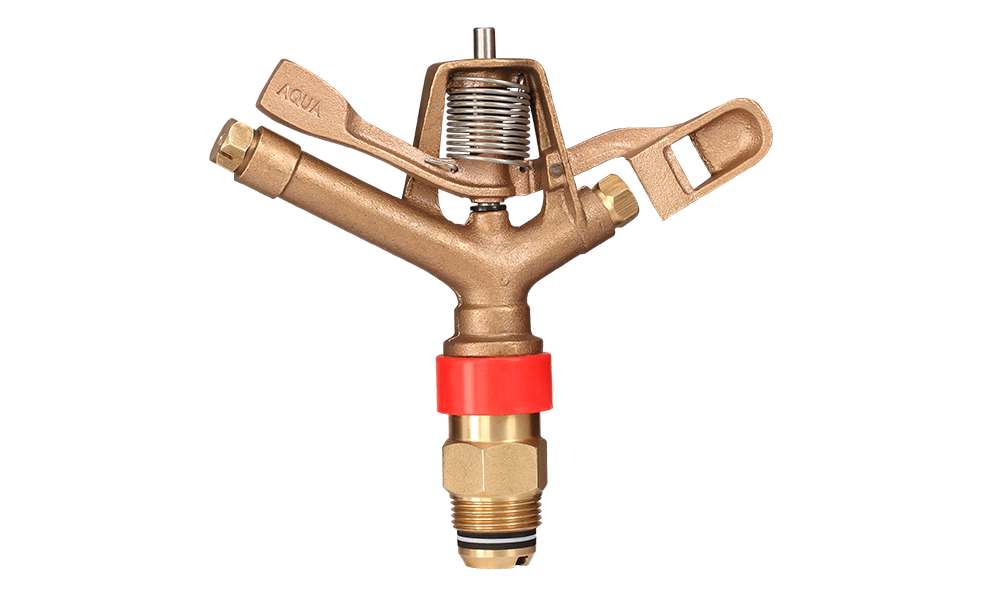
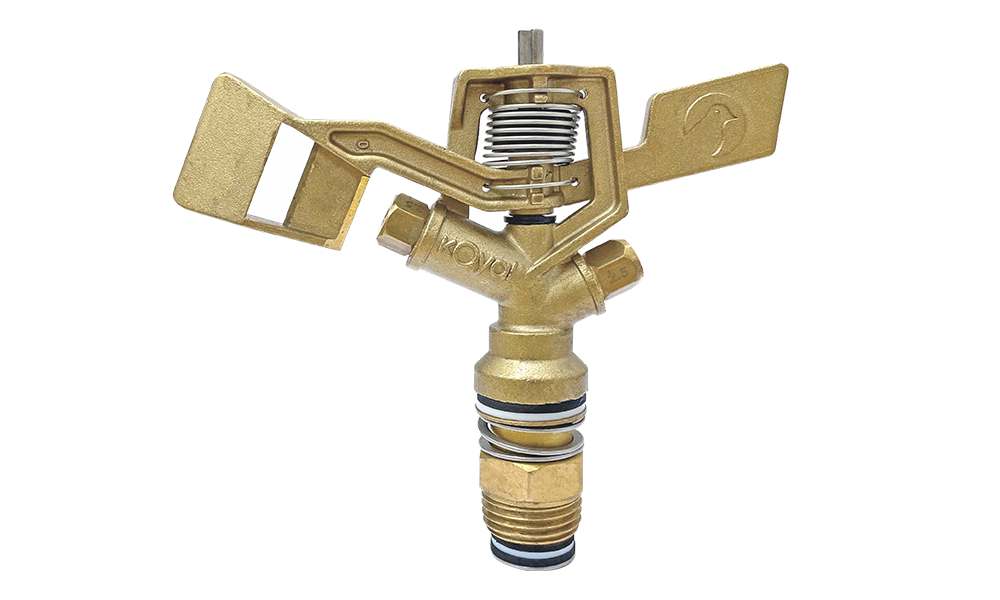
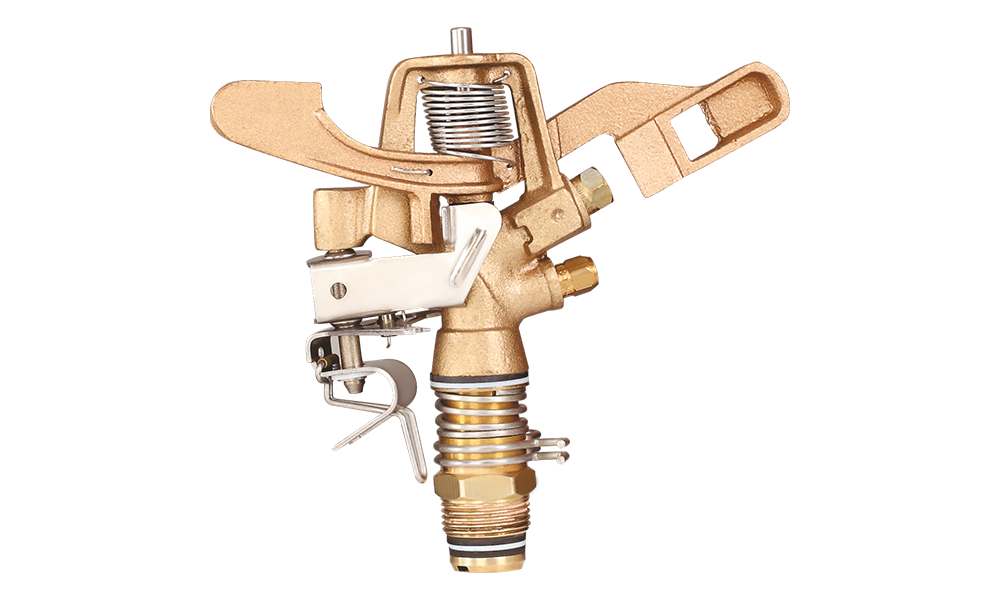
Smaller plots, nurseries, or vegetable beds usually do well with mini or micro sprinklers. They create a soft, misty spray that works beautifully at lower pressure. For wider fields like wheat or maize, impact sprinklers are the better choice as they throw water farther and give broader, more even coverage.
From what we’ve observed at Automat, the right sprinkler can make a real difference to how a crop turns out. The HT-46 Saaras has become a favorite among wheat farmers because it gives steady coverage even when the pressure shifts. On bigger farms, many prefer using the HT-30PM, or Saaras Jumbo, since its double-arm design helps water reach farther and stay even, even when the weather isn’t perfect.
How Sprinklers Improve Wheat Growth ?
A healthy wheat field looks like it’s breathing together, every stalk growing at the same pace, every head filled evenly. That doesn’t happen by luck. It comes from steady watering. A sprinkler system for farming keeps that rhythm going across the entire field.
When water reaches each plant evenly, roots spread better, fertilizers work more effectively, and the crop stays stress-free through the growing season. The soft rain-like spray also keeps the soil loose and airy, which helps the roots get oxygen. It’s a quiet difference, but you can see it in how uniformly the crop stands when harvest time comes.
Efficiency and Sustainability Go Hand in Hand
Sprinklers do more than save time; they help farmers make better use of water. Unlike open channels or manual methods, a well-planned sprinkler for farming gives out just enough water where it’s needed. That means fewer dry patches, less runoff, and overall healthier soil.
Over a season or two, that steady control often adds up to big savings. The field stays moist without overuse, and the farmer uses less energy to pump water. Once the system is in place, sprinklers can run automatically through valves or timers, freeing up time for other work. It’s a simple system that rewards consistency.
Real Benefits Seen in the Field
Farmers who’ve switched to a sprinkler irrigation system often say they can see the difference almost immediately. The soil stays easier to work, and the plants grow more uniformly. In wheat-growing states like Punjab, Haryana, and Rajasthan, where water levels have been falling for years, many farmers say sprinklers have helped them cover more area with the same supply.
This even watering means fewer weeds, fewer dry patches, and steadier crop health. For small and mid-sized farms, that’s a real benefit - more yield without having to dig new wells or overdraw groundwater.
A System That Fits Every Season
What makes an irrigation sprinkler for farming so useful is that it doesn’t lock you into one kind of crop. The same setup that takes care of wheat in winter can be used for pulses, maize, or vegetables once the season changes. You just tweak the spacing or swap a nozzle, and it’s ready to go again.
That kind of flexibility saves both time and money. Farmers don’t have to rebuild their system every few months and can keep using the same one and adjust it as needed.
Wrapping It Up
Farming has always been about balance of soil, water, sunlight, and time. A sprinkler irrigation system might look simple, but it quietly keeps that balance steady. When water reaches the right places at the right pace, the rest of the process falls into place naturally.
At Automat, we’ve seen this happen across hundreds of farms. A reliable sprinkler system isn’t only about watering plants. It helps farmers plan better, reduce effort, and get consistent results from their land year after year. It might look like a small change, but over time it transforms how a farm runs.
FAQs
Which method of irrigation in wheat can save the most water?
Sprinklers do a great job at saving water. They spread it evenly across the field instead of flooding it, so very little gets wasted.
What is the ideal sprinkler spacing for wheat fields?
Usually, keeping sprinklers about 12 to 15 meters apart gives a good coverage. It can vary a bit depending on your water pressure and soil.
How much water can sprinkler irrigation save?
Farmers often notice they use a lot less water, sometimes up to one-third less compared to old flood methods.
How can I keep water distribution uniform in big wheat fields?
It helps to use the same type of nozzles, check the pressure now and then, and make sure the sprinklers are set up at the right angles.
What’s the best irrigation system for wheat?
A sprinkler system works best for most wheat farms as it keeps watering even and saves both water and effort.
Is sprinkler irrigation suitable for all types of soil in wheat farming?
Pretty much, yes. Sprinklers work fine in most soils. You just need to tweak how long you water; sandy soil needs shorter, more frequent rounds, while heavier soil can hold moisture for longer.
What are the energy and water-saving benefits of sprinklers for wheat crops?
Sprinklers use less power since they run on low pressure, and because water goes exactly where it’s needed, there’s very little waste.

Download Mobile App


Get in touch

Plot no. 18-19, Dilshad Garden, G.T. Road, New Delhi 110095.


