
Popular Searches
Popular Searches

How to Select the Right Plastic Impact Sprinkler for Your Farm in India ?
Watering a field looks simple from a distance. But once you're actually managing it, you realise how many small things can affect the outcome. Pressure, spacing, coverage, even how the water falls on the soil. That's where choosing the right plastic sprinkler starts to matter.
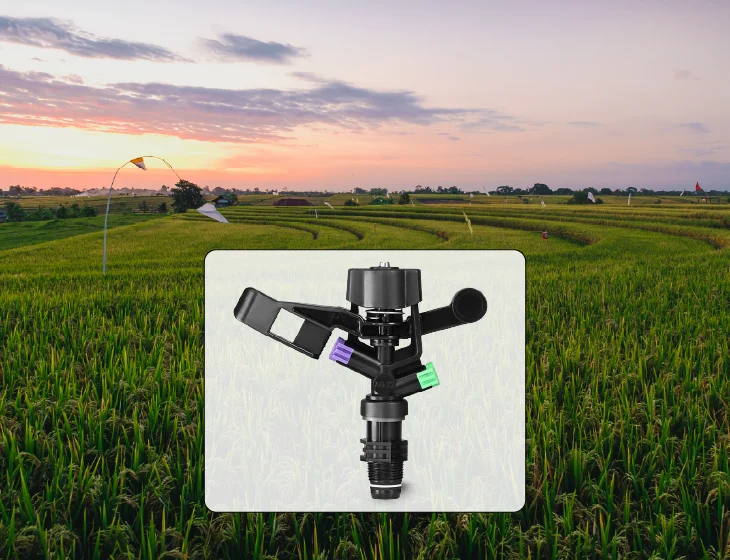
Watering a field looks simple from a distance. But once you're actually managing it, you realise how many small things can affect the outcome. Pressure, spacing, coverage, even how the water falls on the soil. That's where choosing the right plastic sprinkler starts to matter. Not in a technical way, but in a very practical, day-to-day sense.
Understanding how an Impact sprinkler actually works
An Impact sprinkler is not complicated once you've seen it run. Water comes in, hits the arm, and that tapping motion keeps the head turning. What you notice more is the rhythm. When it's working properly, it just keeps moving and spreading water without needing attention every few minutes. That's really the point of it. You set it up, it runs, and you don't have to keep going back to check if something has stopped. Most modern ones are made with materials that don't rust or wear out easily, which helps when they're sitting out in the field all season.
What to expect from Plastic impact sprinkler India conditions
A Plastic impact sprinkler India setup rarely works under perfect conditions. Some days pressure is fine, some days it drops a bit. Sometimes you're switching between crops, sometimes using the same layout for months. So the sprinkler has to be a bit forgiving. It should still rotate properly even when things are not exactly ideal. That's why many of these are designed to work across a range of pressure levels. Not perfect performance every time, but steady enough that you don't have to keep adjusting things.
Why Sprinkler radius matters more than you think
The Sprinkler radius sounds like a simple number, but it changes how your whole layout works. It decides how far one unit can reach, which then decides how many you need in the field. For example, smaller models might cover around 10 to 12 metres. Bigger ones go much farther. But picking the biggest is not always better. If they overlap too much, you end up using more water than needed. If they're too far apart, you start seeing dry patches. So it's more about matching the radius to your field, not just going for range.
Getting water distribution right from the start
Good water distribution is something you don't notice immediately, but you definitely notice when it's off. Some areas stay a bit wetter, others don't get enough. At first, it doesn't look like a big issue, but over time the crop starts showing the difference. A lot of this depends on nozzle design and how the water is broken up and spread. Things like colour-coded nozzles or stream control don't sound important, but they help keep the spread more even without you having to interfere all the time.
When a Low pressure impact sprinkler is the better choice
Not every setup has strong pressure all the time. In those cases, a Low pressure impact sprinkler just makes life easier. It keeps working without needing you to push the system harder. Some models are designed to run even at lower pressure levels and still rotate properly. That means you don't have to keep worrying about whether the sprinkler will stop midway. It also helps with energy use, since you're not forcing the system to work beyond what it can handle.
Different types of plastic sprinkler you'll see on farms
There's no single plastic sprinkler that fits everything. Some are better for vegetables and nursery crops. Others are made for wider spacing or higher discharge. You'll see smaller ones like HT-22 used where coverage needs to be controlled. Then there are models like HT-46 that are more common across general field crops. And then the larger ones like HT-30PM, which are used when the field opens up and you need more reach. It really depends on what you're growing and how your field is laid out.
Where Rain bird type sprinkler designs come in
You'll often hear people mention a Rain bird type sprinkler. It's basically a way of describing how the sprinkler works. A steady rotating motion, decent reach, and fairly even spread. A lot of modern designs follow a similar approach. The name matters less than how smoothly it runs and how evenly it covers the field. If it rotates properly and doesn't leave dry spots, it's doing its job.
Choosing the right plastic sprinkler for your setup
When you're picking a plastic sprinkler, it helps to think less about the product and more about your field. Things like crop spacing, pressure, and how often you'll be using it matter more than specs on paper. If your field changes crops often, you'll want something flexible. If pressure is inconsistent, you'll want something that can handle that without stopping. From what we've seen at Automat, most farmers don't want something complicated. They just want something that runs properly and doesn't need constant fixing.
Bringing it all together
Choosing the right plastic sprinkler setup is really about getting fewer surprises once the system is running. When the setup is right, you don't have to keep adjusting things. Water spreads the way it should, and the field starts behaving more evenly. At Automat, that's what we focus on. Not making things more complex, but making sure the system keeps working the way it's supposed to, even when conditions are not perfect.
Conclusion
There's no single sprinkler that works for every farm. But there is always one that fits your conditions better than the others. Once you find that match, things become simpler. Irrigation feels more manageable, and the crop responds more evenly. And in the long run, that steady, predictable setup is what really helps.
FAQs
What is the ideal spacing for plastic impact sprinklers?
It really depends on the model you're using, but in most fields you'll see them placed somewhere around 8 to 15 metres so the water spreads properly without wasting too much.
Which sprinkler is better for sugarcane, wheat or vegetables in India?
For crops like sugarcane or wheat, people usually go with sprinklers that can cover more area. For vegetables, something smaller and more controlled tends to work better.
How much pressure do plastic impact sprinklers need?
You don't need anything extreme. Just enough pressure for the sprinkler to keep turning smoothly and throw water across its full range.
Are plastic impact sprinklers durable in harsh Indian weather?
They generally hold up well. Good ones are made to sit out in the sun, handle dust, and keep running through the season without too many issues.
What warranty should I look for when buying in India?
There's usually a standard warranty, but what really matters is how easy it is to get it fixed if something goes wrong.

Download Mobile App


Get in touch

Plot no. 18-19, Dilshad Garden, G.T. Road, New Delhi 110095.


