
Popular Searches
Popular Searches

Why Many Wheat Growers Rely on Metal Sprinklers ?
Wheat fields often run irrigation over large, open areas where wind, pressure variation, and long operating hours are common.
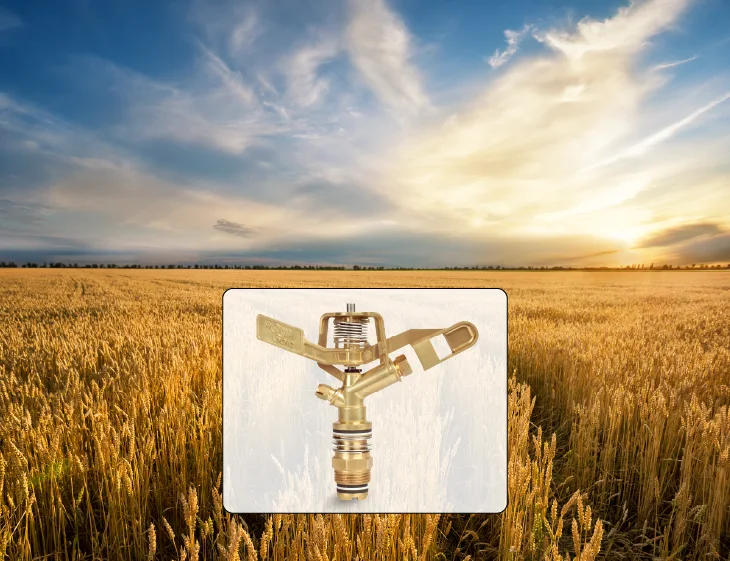
Wheat fields often run irrigation over large, open areas where wind, pressure variation, and long operating hours are common. Under these conditions, even small changes in sprinkler behaviour can affect coverage patterns. For this reason, many growers prefer sprinklers that are less prone to performance drift over time.
Wheat does not ask for frequent watering, but it does demand reliability. Once irrigation is scheduled around key growth stages, there is limited room to correct uneven moisture later. This is where sprinkler material and mechanical stability start playing a much bigger role than they might in short-duration or high-frequency crops.
Irrigation timing and crop response in wheat
Wheat irrigation usually supports specific stages such as crown root initiation, tillering, jointing, and grain filling. If water doesn’t reach the crop evenly at these stages, plants tend to grow weaker and yields usually take a hit.
Because the number of irrigations is limited, every cycle needs to perform as expected. A sprinkler system for wheat has to deliver water evenly across the field without needing constant supervision or mid-season adjustment. In this context, stable sprinkler behaviour matters more than high discharge or wide throw alone.
Why material stability matters in field conditions ?
In open wheat fields, sprinklers put in long hours. They deal with dust in the air, shifting winds, and pipelines that are moved more often than anyone would like. Over time, these things show up in how well a sprinkler keeps its balance, how smoothly it turns, and whether the spray still falls where it should.
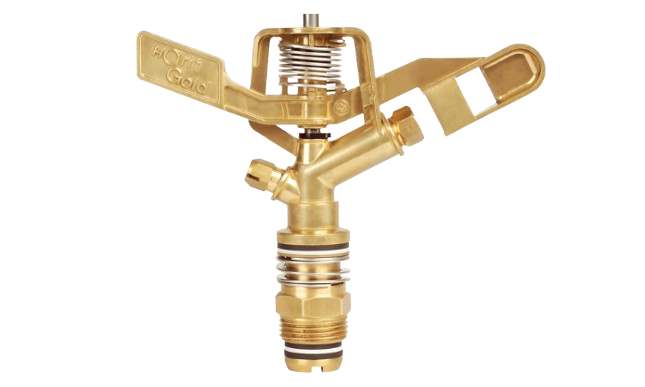
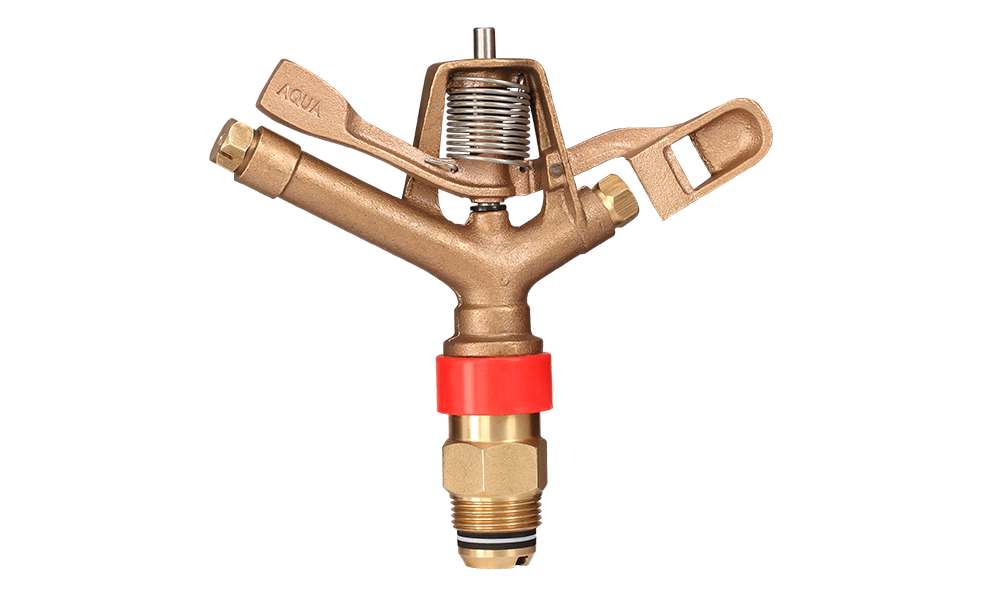
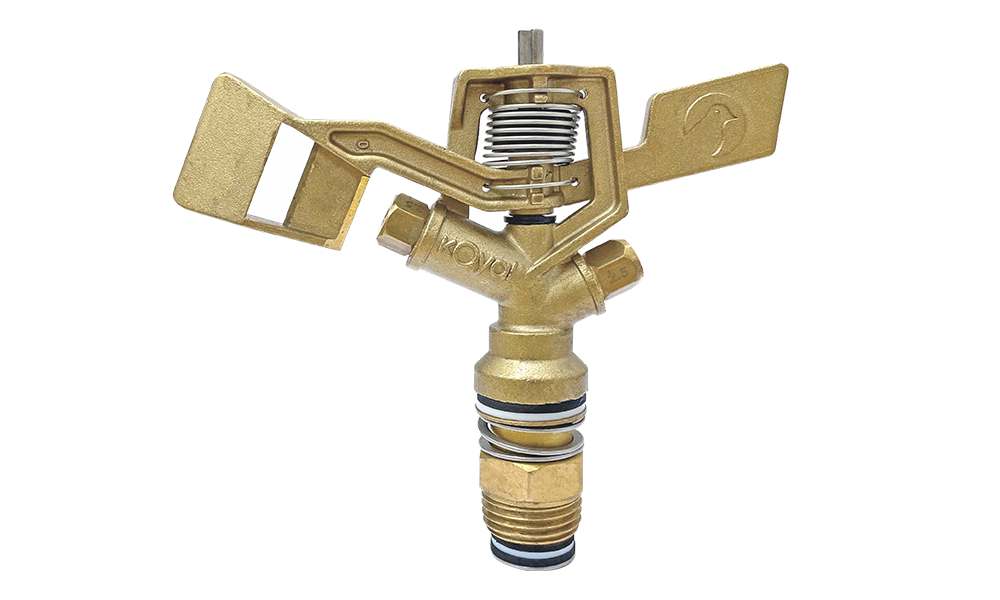
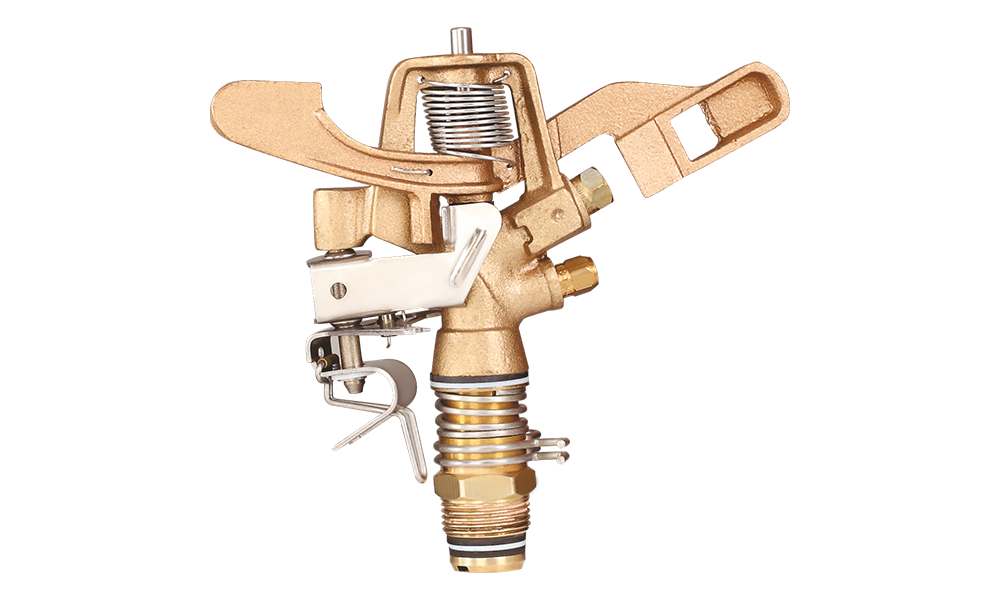
Many farmers lean toward a metal sprinkler because it tends to hold together better under this kind of use. The arm doesn’t slacken as quickly, nozzle edges stay cleaner, and rotation stays closer to what was set at the start. When irrigations are spaced weeks apart instead of days, that steady behaviour becomes hard to miss.
Metal sprinkler irrigation and uniform coverage
Metal sprinkler irrigation is commonly used in overhead systems where uniform distribution is more important than fine control. Wheat fields benefit from even coverage that supports steady soil moisture without creating wet pockets or dry strips.
Metal impact sprinklers rotate steadily and handle pressure variation better during long runs. This helps water spread more evenly across spacing, especially when wind conditions change slightly between irrigation cycles. Over time, this reduces patchiness and supports more uniform crop development.
Long operating hours and performance retention
Wheat irrigation often runs during extended windows, sometimes overnight, to make the most of available water and power. These long operating hours expose weak components quickly.
Metal sprinklers usually keep working the same way even after long hours in the field. The arm keeps moving properly, the spray doesn’t thin out, and the reach stays close to what was set at the start. For farmers, that simply means fewer stoppages and less time spent fixing small things in the middle of irrigation.
Fit within a sprinkler system for wheat
On many wheat farms, the same water source feeds more than one field or crop. As different sections turn on and off, pressure naturally shifts across the line. Sprinklers need to keep working through these changes without throwing the coverage off.
Metal sprinklers are often chosen in these setups because they stay steady across normal pressure ups and downs, helping the irrigation stay even, especially in large fields where some pressure drop along the pipeline is part of everyday operation.
Supporting water saving in wheat farming
Water saving in wheat farming is not always about reducing the number of irrigations. Often, it comes from applying water evenly so that no extra cycle is needed to compensate for missed areas.
When sprinklers maintain their coverage pattern over time, irrigation stays efficient. There is less temptation to overwater to “cover gaps,” and scheduling remains closer to the crop’s actual requirement. Consistency supports conservation quietly rather than through aggressive control.
Field crop sprinkler irrigation and durability
Field crop sprinkler irrigation places different demands on equipment than orchard or garden systems. Sprinklers get shifted around, sit out in the open, and still have to work properly without needing constant tweaking.
Metal sprinklers are widely used in these situations because they tolerate handling and field wear better. Their weight and construction help them stay stable during operation, reducing vibration and uneven rotation that can develop over time in lighter units.
Where mini systems fit into wheat fields
In some layouts, especially near field edges or smaller plots, a mini sprinkler kit may be used alongside larger sprinklers. These are typically applied where coverage requirements are limited or where spacing needs to be adjusted.
Even in these cases, growers often prefer metal components at key points to ensure stability. Mixing system sizes works best when the core irrigation behaviour remains predictable.
Importance of valves in maintaining consistency
Water needs to come through smoothly for a sprinkler to work right. A metal sprinkler valve helps prevent sudden pressure changes that can disturb rotation or spray.
When flow stays even, sprinklers stay consistent. In wheat fields, that consistency matters more than it seems.
Practical field experience over time
Many growers observe that metal sprinklers require fewer mid-season replacements. They tend to keep working the way they were set up, even after months of exposure.
This does not mean they are maintenance-free, but it does mean fewer surprises. When irrigation runs as planned and the system does what it’s supposed to, farmers don’t have to keep stepping in to fix things.
Design approach grounded in field use
At Automat, irrigation systems are built with long working seasons in mind. What matters is how sprinklers hold up after many runs in real field conditions, not just how they look or perform on day one.
Metal sprinklers fit this way of thinking because they keep doing their job steadily, even as conditions change.
Conclusion
Wheat irrigation doesn’t need a complicated setup, but it does need to work the same way every time. When a sprinkler behaves differently from one cycle to the next, uneven moisture often shows up after the window to fix it has already passed.
A metal sprinkler lowers that risk simply by staying consistent, making it easier to manage crop growth more evenly. That kind of reliability is what continues to guide how irrigation systems are designed and used in wheat fields.
FAQs
Are metal sprinklers better for wheat?
Many growers prefer them because they keep throwing water the same way, even after long hours in the field.
How much area can one metal sprinkler cover?
It varies by model and pressure, but they’re generally made to suit wide, open wheat fields.
Do metal sprinklers need high pressure?
No. Most run comfortably at moderate pressure if the system is set up properly.
Are metal sprinklers cost-effective for wheat crops?
They usually last longer, so farmers spend less time and money replacing parts mid-season.
How long do metal sprinklers for wheat last?
With basic upkeep, many stay in use for several seasons without noticeable drop in performance.

Download Mobile App


Get in touch

Plot no. 18-19, Dilshad Garden, G.T. Road, New Delhi 110095.


