
Popular Searches
Popular Searches

The Importance of a Disc Filter for Drip Irrigation
Drip systems are sensitive to water quality, and even light contamination can affect how the emitters perform. This is why a disc filter for drip irrigation becomes so important in day to day use.
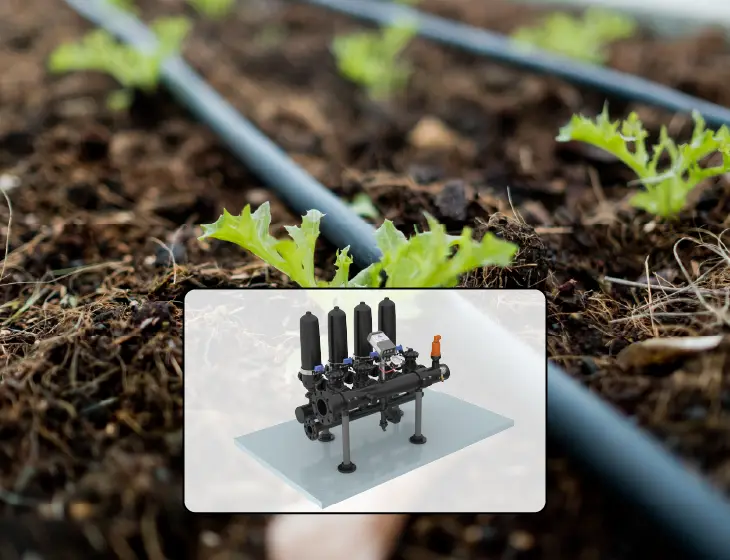
Drip systems are sensitive to water quality, and even light contamination can affect how the emitters perform. This is why a disc filter for drip irrigation becomes so important in day to day use. Drip works with gentle, controlled flow, and any fine debris in the line tends to create problems much sooner than in other irrigation methods. By keeping the water free from fines, organic matter, and suspended particles, the filtration unit helps the system deliver moisture evenly across the field. This is one of the main reasons farmers prioritize disc filtration when setting up their drip networks.
Why Filtration Sits at the Core of Every Drip Layout ?
A Drip Irrigation System performs well only when the water arriving at the laterals remains consistent in both flow and quality. Drip lines have narrow passageways where impurities can settle quickly, and once that happens, maintaining uniform discharge becomes difficult. Farmers often notice that system performance improves immediately when the filtration is handled correctly.
On most farms, the first thing set up at the head unit is a good Drip irrigation filtration system, since it is easier to manage water quality there than to deal with blockages later in the field. Even when the water appears clear, it can still carry silt, clay, or organic particles that are too small to notice but large enough to clog emitters. For this reason, growers treat filtration as a foundation rather than an add-on.
How Disc Filtration Supports Day to Day Field Work ?
One of the practical disc filter benefits for farming is the way disc cartridges handle fine impurities while allowing steady flow. In most farms that depend on canal or open-well water, the load of organic material changes through the week, and disc units help stabilize the system during these shifts. Farmers often see fewer blockages and better uniformity once the discs begin managing the smaller particles that slip past coarse filtration.
This reliability helps drip lines perform closer to their expected output, which keeps irrigation schedules predictable.
What Makes the Disc Filter Design Practical ?
A micro irrigation filter has to run long hours without constant attention. Disc-based units are preferred because the design allows strong filtration in a compact body while still being easy to service. Cleaning is usually straightforward. A rinse or backflush usually brings the filter back to its working condition, and the downtime stays low even during peak irrigation periods.
At Automat, we design filtration solutions that fit these field realities. The AquaDisc series carries out automatic cleaning using minimal water during backflushing, so the farmer does not have to interrupt irrigation just to clear the filter. The built-in FILTER SMART controller keeps the cleaning cycle consistent, helping the filter stay responsive to water quality changes through the day.
Keeping the System Safe From Long-Term Damage
When impurities enter the pipeline repeatedly, they settle and become harder to remove later. This affects water flow, fertigation, and eventually crop performance. Putting a filter for drip irrigation at the inlet keeps the tiny particles from entering the rest of the layout. Once those bits are stopped early, the lines don’t collect as much residue, and day to day upkeep becomes much easier.
Because abrasive material is intercepted early, pumps, valves, and regulators also face less wear. This becomes especially helpful for farms using water sources that shift in quality with rainfall or seasonal algae growth.
Disc Filters in Different Field Conditions
When the goal is to choose an Agricultural water filter for varying loads of fine organic matter, many farmers turn to disc filtration because it stays stable even when the water quality changes suddenly. If the source water carries heavy silt, growers often pair a sand media filter before the disc unit. The media filter handles the coarse impurities, and the disc filter focuses on the finer load. This arrangement keeps the head unit running smoothly despite fluctuations in water quality.
How Automat Approaches Filtration for Drip Systems ?
At Automat, we have seen how a well-selected filter shapes the overall performance of the irrigation network. Farmers often share that once the filtration is set correctly, their lines stay clearer and the system becomes far easier to manage. Our disc filters are built for dependable operation, straightforward cleaning, and long service life, ensuring farmers spend less time troubleshooting and more time focusing on their crop.
Reducing Maintenance and Avoiding Unplanned Shutdowns
Emitter clogging disrupts both water and fertilizer distribution. With a disc filter for drip irrigation working at the head unit, many of the usual clogging issues simply never reach the laterals. Filtration also reduces how frequently laterals need flushing, which means irrigation windows remain uninterrupted.
When the filter is opened for cleaning, the cartridges release the accumulated material quickly. This keeps maintenance simple, even for growers who are still new to drip systems.
Making Drip Systems Easier to Manage
Every farm eventually needs routine Drip system maintenance, but when the filtration is strong, these tasks stay manageable instead of turning into repeated emergency fixes. Disc units catch the majority of the impurities before they reach the emitters, leaving the network more predictable through the season.
How Disc Filters Fit Into a Complete Irrigation Plan ?
Most farms use a combination of filters, but the disc filter for drip irrigation often becomes the part that farmers depend on the most during daily operation. It keeps the water suitable for fertigation, slows down buildup inside the laterals, and helps the system stay steady with only periodic flushing. This consistency reduces replacements and keeps operating costs under control.
Conclusion
In the end, the filter you pick decides how quietly your drip setup runs through the season. A disc filter for drip irrigation that does its job well keeps the water clean, and that one step prevents most of the small issues that usually slow farmers down. Cleaner lines mean steadier moisture and fewer surprises, which is what every grower hopes for once the system goes into daily use.
At Automat, our approach to filtration is built around actual field conditions, helping farmers maintain smooth irrigation without unnecessary interruptions.
FAQs
What is the role of disc filters in the drip system?
They keep the tiny impurities out of the lines so the emitters can run the way they’re supposed to.
What are the advantages of a disc filter?
They hold fine debris well, stay steady even when the water quality shifts, and are simple to clean when the load builds up.
Is a disc filter necessary if water looks clean?
Yes, because water that looks clear can still carry particles small enough to settle inside the emitters over time.
Can disc filters work with low-pressure drip systems?
They usually do, as long as the filter is sized correctly and the system still maintains the minimum pressure it needs to move water through.
What micron size is best for drip irrigation?
Most farms stay close to the 100–130 micron range, since it matches the size of particles that normally trouble drip lines.

Download Mobile App


Get in touch

Plot no. 18-19, Dilshad Garden, G.T. Road, New Delhi 110095.


