
Popular Searches
Popular Searches

How Flow Control Valves and Hydro Cyclone Filters Improve Water Use
Sometimes the trouble in an irrigation setup has nothing to do with the sprinklers in the field. It usually starts right at the source, where the water first enters the system.
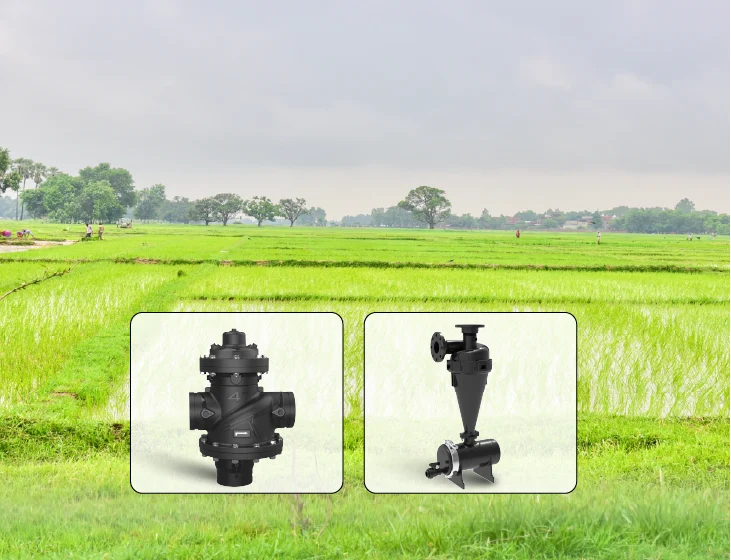
Sometimes the trouble in an irrigation setup has nothing to do with the sprinklers in the field. It usually starts right at the source, where the water first enters the system. If the water carries sand or the flow keeps shifting, everything downstream reacts to it. That’s why we usually look at filtration and flow control first, because they set the tone for how smoothly the rest of the system runs.
Where Water First Goes Wrong
Any sprinkler irrigation system can only do its job if the water feeding it is clean enough and moving at the right pace. Even a small amount of sand, silt, or grit can change how the pressure behaves inside long pipelines. One clogged spot forces pressure up somewhere else. One loose patch of flow can affect the spacing of the spray. Over a season, all these tiny changes show up in the field as uneven growth or patches that don’t hold moisture well.
A good irrigation filtration system keeps those early problems from creeping in. It’s not just about removing dirt; it’s about keeping things predictable. Once the water enters clean, the rest of the line has a much easier time staying stable.
What Hydro Cyclone Filters Actually Solve
Surface water and borewell water almost always carry heavier impurities. Sand is the most common. It moves fast, scratches parts, and settles where it shouldn’t. A Hydro Cyclone Filter targets exactly this.
Inside a hydrocyclone, the water spins in a tight circular motion. The heavier particles slide to the outer wall and drop into the chamber below. The cleaner water rises. It’s a simple idea, but it protects the entire network of pipes, valves, and sprinklers from early wear.
At Automat, we put a lot of work into getting this part right. Our Hydro Cyclone Filters like the HT-144, HT-145, and HT-146 are built from reinforced polypropylene and nylon, materials that hold up well outdoors. They work efficiently even when the water carries a strong sand load, and the dirt collected can be flushed out quickly through the drain port. That small action keeps your lines from taking unnecessary damage.
What Flow Control Looks Like On the Ground
Just as water needs to be clean, it needs to move at the right pace. Many fields rely on Flow Control Valves to guide how fast the water travels through different sections of the line. Without this, pressure jumps around. One area may get too much, while another struggles for flow.
A Flow control valve for water helps settle the pace. You set it once, and it keeps the flow steady so the rest of the system doesn’t have to overcompensate. When the flow stays even, the sprinklers maintain their pattern, and the impact on the crop is immediate. A sudden burst or slowdown in pressure becomes far less likely.
In wider setups, especially where long pipelines feed multiple zones, an adjustable water flow control valve keeps each section balanced. It’s a small device, but it quietly ensures that everything downstream behaves the way it should.
When Filtration and Flow Work Together
Clean water moves better. Steady water spreads better. And when both these conditions hold, a sprinkler irrigation system becomes far more reliable. You don’t have to keep checking pressure every morning. You don’t see sprinklers slowing down on one end and over-spraying on another. Over the season, this balance shows up as healthier soil moisture and more uniform coverage.
Hydro Cyclone Filters handle the heavy sand. Secondary filters take care of finer impurities. Flow Control Valves smooth out the speed of the water. Together, they set up the field to work without constant correction.
When Automation Helps
Manual cleaning takes time, especially in larger farms. That’s why some farmers use automated setups like the Hydrocyclone with Auto Flush Filter Kit. It clears out the dirt at regular intervals so the filtration unit doesn’t choke.
What This Means for Water Use
When the water enters clean and flows evenly, you end up using less of it. The sprinklers distribute water more accurately, the system wastes less water through leaks or uneven pressure, and the soil absorbs better. This is what agricultural water optimization looks like in practical terms. It isn’t about using new technology on every corner of the field. It’s about fixing the early points where water gets lost or mismanaged.
A Simple Way to Wrap This Up
Clean water and controlled flow don’t look dramatic, but they change how the entire field feels. When the filtration holds up and the pace of water stays even, the sprinkler irrigation system becomes far easier to trust.
FAQs
What is a hydro cyclone filter used for?
It separates sand and heavier particles from the water before it enters the system, which keeps the pipelines and sprinklers safe from early wear.
How do flow control valves save water?
They steady the pace of the water so nothing rushes through or gets wasted, and the system only delivers what the field actually needs.
Can I use a hydro cyclone filter with drip irrigation?
Yes, it works well as the first step in cleaning the water, especially if your source carries sand or grit.
How does pressure regulation affect crop yield?
When the pressure stays steady, the water spreads the way it’s meant to. The plants grow more evenly because nothing gets over-watered or missed.
What are the advantages of using both filters and valves together?
They make the whole setup easier to trust. The water stays clean, the flow stays calm, and you spend far less time fixing little issues during the season.

Download Mobile App


Get in touch

Plot no. 18-19, Dilshad Garden, G.T. Road, New Delhi 110095.


