
Popular Searches
Popular Searches

Why Do Filters, Valves, and Sprinklers Matter So Much in Today’s Farms?
There’s a quiet kind of order behind every healthy field. It’s in the water moving right, the sprinklers running steady, and the valves doing their job without a sound
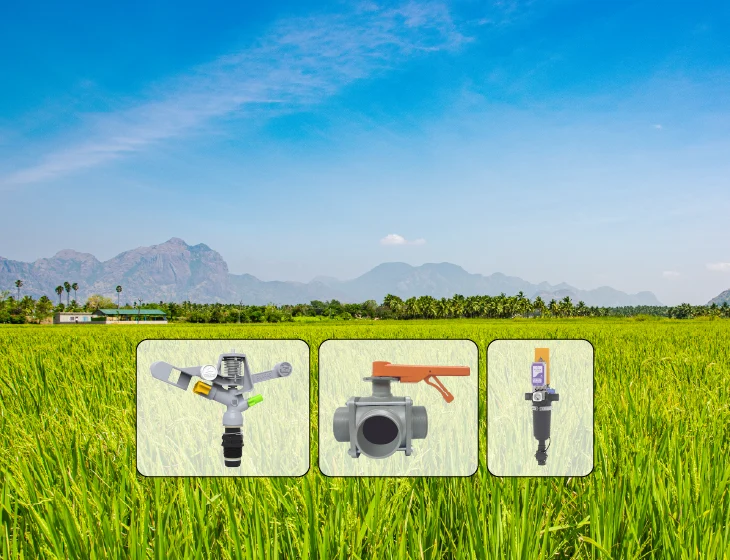
There’s a quiet kind of order behind every healthy field. It’s in the water moving right, the sprinklers running steady, and the valves doing their job without a sound. That balance comes from small parts that rarely get the credit they deserve.
What Changed in the Fields ?
There was a time when irrigation meant letting water loose and hoping it reached the far end of the field. It worked for a while, but today things are different. Water is harder to manage, power costs more, and the weather doesn’t follow old patterns anymore.
That’s why farmers have started turning to systems that can think, respond and work efficiently. The sprinkler irrigation system is one of those quiet revolutions that plans and quenches the field responsibilly, working in a rhythm with filters, valves, and sprinklers.
Keeping the Water Clean Before It Travels
No irrigation system can perform well with dirty water. Even a few grains of sand or silt can slow things down. That’s where the Hydrocyclone Filter with its cone-shaped body fitted into the pipeline, earns its place.
When water passes through it, the design creates a spinning motion. The heavier sand and dirt get pushed to the edges and settle in the bottom chamber, away from the clean flow.
At Automat, we’ve worked with this design for years, refining the angles and internal flow to make sure it works under real field pressure, and not just in a lab. Farmers who use borewell or open-source water know the value of it as it provides cleaner water, fewer clogs, and saves time spent on flushing the lines.
Valves That Keep the Balance Right
Once the water is clean, the next task is to guide it. That’s where irrigation valves step in.
A good valve decides how evenly water spreads across the field and protects the system from sudden pressure drops or surges. If a pump starts too fast or a line shuts too suddenly, the pressure wave can hit hard enough to crack the pipes.
The PVC Ball Valve is often the one that takes on that job. It’s tough, doesn’t rust, and handles constant outdoor exposure without wearing down. Its quarter-turn handle gives the farmer quick control without fighting resistance.
We’ve seen how something as small as this can change the daily rhythm on the field. Instead of spending hours adjusting the flow, a farmer can set it once and focus on the crops instead.
Sprinklers That Carry the Work Forward
A sprinkler irrigation system looks simple when it’s running. Water arcs through the air in neat patterns, settling like light rain. But that balance depends on the sprinklers themselves.
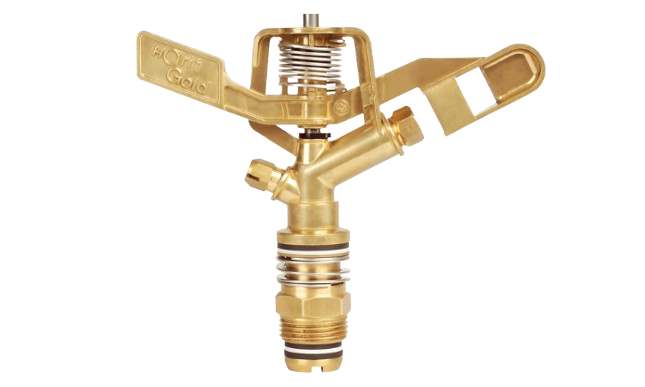
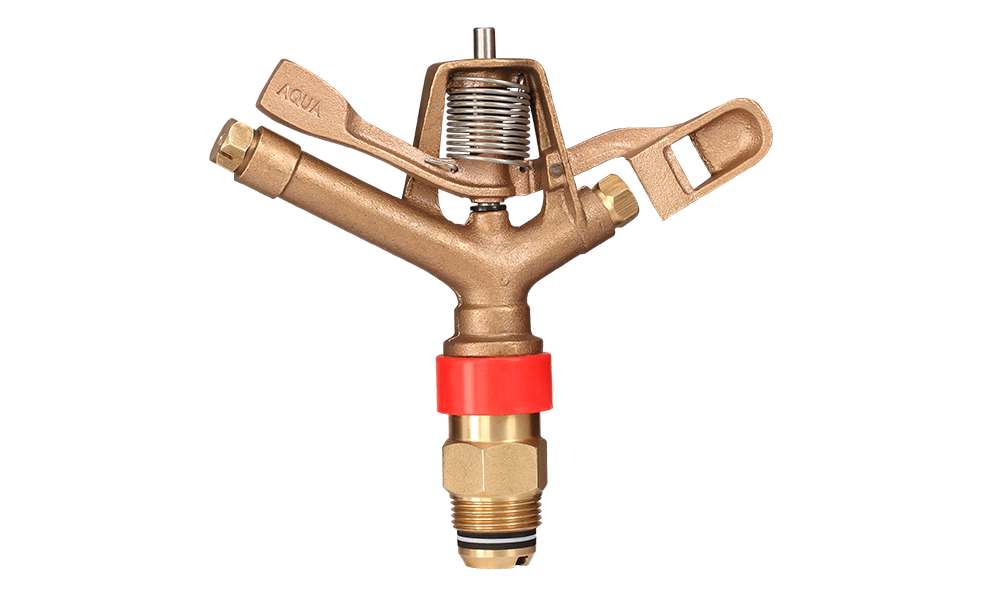
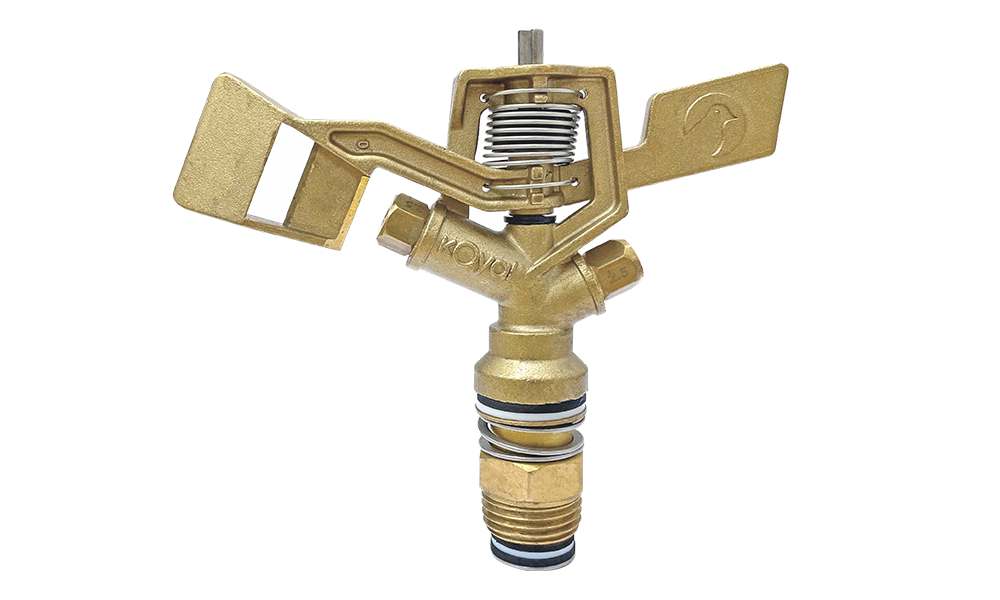
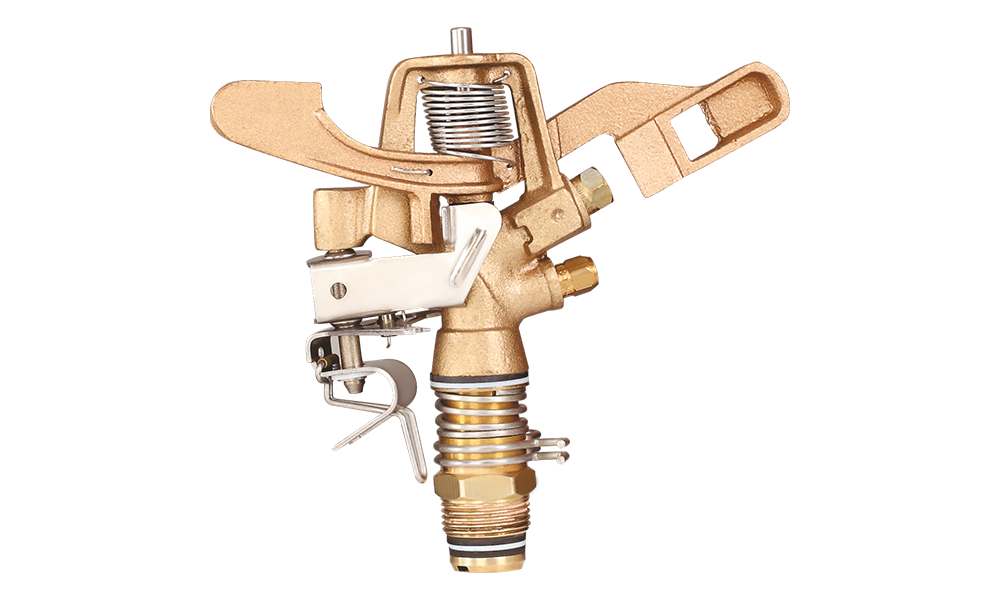
Impact Sprinklers do most of the heavy lifting. A small arm inside strikes the water stream, making the head rotate slowly. Each strike keeps the spray uniform, reaching a wide area without wasting pressure. It’s a classic design that still works because it mimics nature which provides even, steady rainfall that the soil can absorb properly.
Plastic Sprinklers are made for rough, open conditions. They’re light enough to move around, don’t corrode in fertilizers, and perform well even when the water pressure isn’t perfect. For crops like vegetables and pulses, they’re the everyday workhorses that rarely fail.
But in larger farms or places with harsher climates, Metal Sprinklers take over. These are the heavier sprinklers, mostly made of brass or aluminum. They don’t buckle when the pressure climbs, and the spray stays more controlled even on windy days. That’s why they’re common in wide farms growing things like sugarcane or maize.
With all these sprinklers working together, the field gets covered properly. Add valves to settle the pressure and filters to keep the water clear, and the system starts running in a simple, steady rhythm.
What It All Adds Up To
When the right filters, valves, and sprinklers come together, the sprinkler irrigation system settles into a steady rhythm. Water reaches where it needs to go, pressure doesn’t swing around, and most of the small day-to-day issues disappear. One blocked line or a valve that doesn’t open fully can throw things off quickly, and farmers often tell us they notice that difference almost immediately. Once those slips are fixed, the field evens out again, which says a lot about how much these parts quietly hold the system together.
What We’ve Learned Over Time
Working on irrigation systems for years has made us appreciate the parts that keep going without much attention. The Hydrocyclone Filter that keeps pulling out grit, the PVC Ball Valve that still turns smoothly after long months in the sun, the Impact Sprinkler that keeps its pattern even after hundreds of hours in the field. These details matter more than they look.
Good irrigation isn’t about complexity, it’s about clarity, and when the pieces fit well, the results show quietly in the field.
FAQs
How do filters improve irrigation system performance?
They keep sand, silt, and debris out of the lines, so the flow stays smooth and the equipment lasts longer.
What is the function of a valve in agriculture irrigation?
A valve simply helps guide the water — opening, slowing, or stopping the flow so everything runs in balance.
Why are sprinklers important for modern agriculture?
They spread water evenly across the field, which helps crops grow without dry patches or overwatered spots.
Can one irrigation system use both drip and sprinkler setups?
Yes, many farms mix the two depending on the crop, as long as the pressure and layout are planned correctly.
What are signs of clogging in filters or sprinklers?
If the pressure drops, the spray pattern changes, or some areas stay drier than others, there’s usually something blocking the line.

Download Mobile App


Get in touch

Plot no. 18-19, Dilshad Garden, G.T. Road, New Delhi 110095.


