
Popular Searches
Popular Searches

Latest Drip Irrigation Systems Driving India Irrigation Market
For centuries, agriculture has been the lifeblood of India, employing millions and contributing significantly to the GDP.
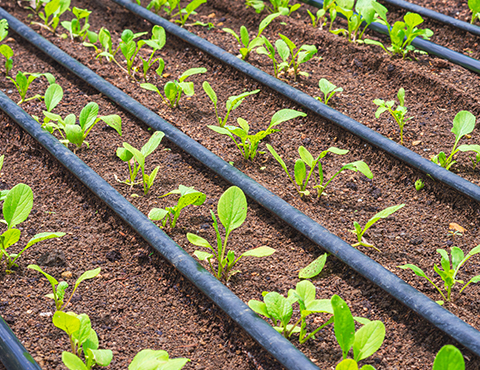
For centuries, agriculture has been the lifeblood of India, employing millions and contributing significantly to the GDP. But this vital sector faces a growing challenge: water scarcity. Traditional flood irrigation methods, which flood fields with water, can waste up to 70% of this precious resource due to evaporation and runoff. With nearly 80% of India’s water used in agriculture, finding sustainable irrigation solutions is critical—especially as the India irrigation systems market continues to expand in response to these challenges.
This is where dreep irrigation latest technologies step in, offering an advanced solution for Indian farms. Drip irrigation systems deliver water directly to the root zone of plants through a network of tubes and emitters, minimizing waste and maximizing efficiency. These systems are particularly effective for a wide range of drip irrigation crops, delivering both environmental and economic benefits. By conserving water, drip irrigation helps ensure long-term agricultural productivity and contributes to a more sustainable future for our planet.
Ways Water Scarcity is Combated in India Through Drip Irrigation ?
1. Increase in Drip irrigation across India
Currently, drip irrigation covers India’s agricultural land, representing 19% of the country’s total land area, or 6,112.05 thousand hectares. Farmers are increasingly realizing the potential of this technology in reducing water usage and increasing crop productivity. The area under drip irrigation in India has been steadily rising. A key factor in this expansion is the development of a wider variety of drip irrigation valves and accessories, catering to the diverse needs of farms of all sizes. These valves allow for precise control over water flow to different parts of the field, ensuring efficient irrigation and maximizing water conservation.
2. Government Schemes and Supports
India has implemented several initiatives and subsidies to promote drip irrigation. A key example is the Pradhan Mantri Krishi Sinchayee Yojana (PMKSY), which aims to enhance water use efficiency in agriculture. Through PMKSY, farmers can receive financial assistance to install drip irrigation systems. This not only reduces their dependence on conventional irrigation methods but also helps conserve water.
In addition to PMKSY, state governments offer incentives and programs to encourage the use of drip irrigation. These include subsidies for equipment purchases, technical assistance, and training programs that educate farmers on the proper use and benefits of drip irrigation systems. This multi-pronged approach of central and state government support has been instrumental in boosting the adoption of drip irrigation in India.
According to the Press Information Bureau (PIB), government schemes are increasingly focusing on enhancing water use efficacy, specifically through drip and sprinkler irrigation. These initiatives, coupled with technological advancements, are playing essential roles in driving the growth of drip irrigation in India.
3. Advances in Drip Irrigation
New technology has improved drip irrigation, making it more efficient. Precision irrigation, for example, uses sensors and automation to give plants the right amount of water and nutrients directly at their roots. This saves water and helps crops grow better. Another improvement is combining drip irrigation with fertigation, where fertilizers are mixed with the water and given straight to the roots. This spreads the nutrients evenly, reduces waste, and is better for the environment. Also, drip irrigation accessories like pressure regulators and flow meters give farmers more control over water use, letting them adjust irrigation to fit their crops and soil.
Also Read: Discover Drip Irrigation Systems Benefits on Indian Farming
4. Versatile Crop Options
Drip irrigation is highly versatile and can be used to irrigate a wide range of crops, such as peas, vegetables, flowers, and field crops. However, it is particularly ideal for plants with shallow root systems or that need precise moisture management, like tomatoes, peppers, cucumber bushes and melons. Additionally, farmers can apply drip irrigation to all types of perennial crops, including grapes and citrus fruits.
6 Benefits of Drip Irrigation for Indian Farmers
Drip irrigation, a popular water irrigation system among Indian farmers, offers a host of advantages for sustainable farming practices. Some of its benefits are as follows:
1. Increased Water Efficiency
Drip irrigation systems precisely deliver water to the plant’s root zone, reducing evaporation and runoff. This results in significant water savings, which is crucial in regions with limited water resources.
2. Enhanced Crop Yield
By providing plants with optimal nutrients and water, drip irrigation fosters healthier growth, leading to higher-quality and higher-yielding crops. This, in turn, boosts profitability for farmers.
3. Soil Health
Drip irrigation minimizes soil disturbance, effectively controlling weeds and diseases while maintaining soil moisture levels between plants. By reducing reliance on herbicides and pesticides, one not only saves costs but also promotes environmental sustainability.
4. Labor Reduction
Unlike traditional irrigation methods that require constant monitoring and manual labor, drip irrigation systems operate efficiently with minimal intervention. This saves farmers time and energy for other farm tasks, enhancing overall productivity and quality of life.
5. Environmental Sustainability
Drip irrigation systems contribute to water conservation by minimizing wastage and reducing chemical inputs. Additionally, they help prevent soil erosion, promote responsible farming practices, and preserve natural resources.
6. Cost-Effectiveness
Over time, the efficiency and effectiveness of drip irrigation systems translate into long-term cost savings for farmers. By reducing water usage, labor requirements, and chemical inputs, these systems offer a sustainable and economically viable solution for agriculture in India.
Conclusion
Thanks to dreep irrigation latest innovations, advancements in this technology are transforming the landscape of Indian agriculture. This sustainable solution offers a powerful weapon against water scarcity and the challenges posed by climate change, while supporting a wide range of drip irrigation crops across diverse climatic regions. As India strives towards a more sustainable future, the growth of the India irrigation systems market highlights the increasing adoption of efficient water management solutions.
Automat Industries, with their expertise in drip irrigation solutions, can play a crucial role in empowering farmers and ensuring the efficient use of this vital resource. By working together, stakeholders across the agricultural sector can ensure that water flows not just to fields but also towards a more prosperous and sustainable future for all.
Connect with Automat Industries experts today and learn about new technology to improve farming efficiently.
Faq's
How does drip irrigation help in conserving water?
Drip irrigation helps conserve water by delivering it directly to the plant’s root zone through a controlled network of tubes, emitters, and valves. This method significantly reduces water loss caused by evaporation, runoff, and over-irrigation, which are common in traditional flood irrigation systems. With drip irrigation latest technologies such as precision irrigation, sensors, and automation, farmers can supply the exact amount of water and nutrients required by crops, ensuring maximum efficiency and long-term water conservation.
Why are various types of irrigation systems used in India?
Various irrigation systems are used in India due to differences in climate, soil conditions, crop types, and water availability across regions. While traditional methods are still practiced in water-rich areas, increasing water scarcity has accelerated the shift toward efficient solutions. The expansion of the India irrigation systems market reflects the need for adaptable irrigation methods that suit farms of different sizes and cropping patterns, supported by government schemes and technological advancements.
Where is drip irrigation used in India?
Drip irrigation is widely used across India, particularly in regions facing water stress and in areas cultivating high-value crops. It is commonly adopted for drip irrigation crops such as vegetables, fruits, flowers, sugarcane, cotton, vineyards, and orchards. With government support and rising awareness, drip irrigation is increasingly being used by both large-scale farms and small and marginal farmers across diverse agricultural regions of the country.

Download Mobile App


Get in touch

Plot no. 18-19, Dilshad Garden, G.T. Road, New Delhi 110095.


