
Popular Searches
Popular Searches

Choosing the Right Butterfly Valve Type for Drip Irrigation in Cotton Fields
Cotton doesn’t rush its growth. It spends time building roots first, then moves into forming squares and bolls, where water availability starts to matter much more. Sudden changes in moisture, even brief ones, can push the plant off balance.
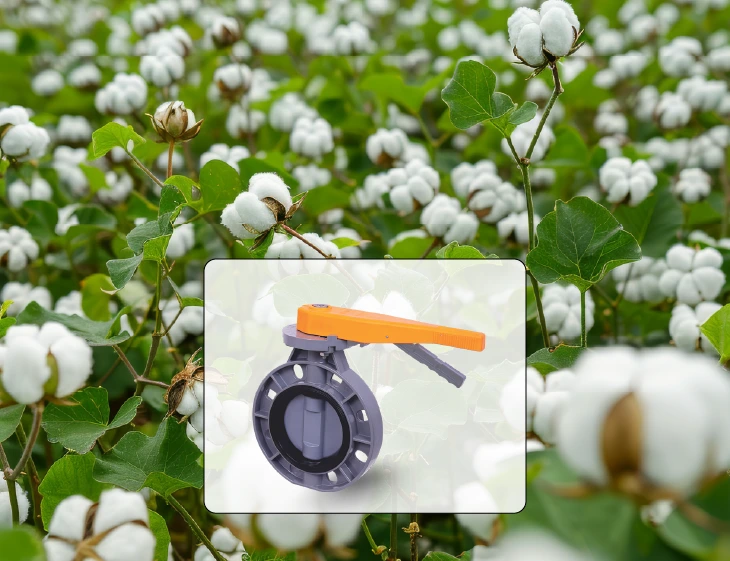
Cotton doesn’t rush its growth. It spends time building roots first, then moves into forming squares and bolls, where water availability starts to matter much more. Sudden changes in moisture, even brief ones, can push the plant off balance.
In large cotton fields, pressure shifts are common as water moves across long pipelines and different sections turn on and off. Drip irrigation helps keep moisture close to the roots, but only if flow stays steady through the system. That’s where choosing the right butterfly valve type makes a quiet but important difference.
Why cotton fields need careful flow control ?
Cotton is usually grown across wide, open plots where irrigation lines stretch far from the pump. Unlike smaller vegetable fields, cotton layouts often include long laterals and multiple sub mains operating together. When one section shuts off or another opens, pressure changes ripple through the line.
If those changes are not managed, drip emitters closest to the source may discharge more water than intended, while distant rows receive less. Over time, this creates uneven plant growth that becomes visible during flowering and boll development. Once that stage passes, correcting moisture differences becomes difficult.
When a valve opens and shuts gently, the system is less likely to see sharp pressure changes. This is why butterfly valve irrigation is commonly used in cotton drip systems, especially where simple, reliable control is needed over large flows.
Understanding irrigation valve types in drip systems
Not every valve behaves the same once water starts moving. Some are meant only to open and shut, while others allow the flow to be eased in and out without a jolt.
Among commonly used irrigation valve types, butterfly valves are often picked for drip systems because they’re simple and predictable. The disc turns smoothly, so water comes on and goes off without sudden jumps.
That steady behaviour suits cotton fields well, where irrigation runs in planned cycles and the system needs to switch on and off without upsetting the rest of the line.
How many types of butterfly valves are there ?
When people ask how many types of butterfly valves are there, it usually comes down to how they’re built rather than what they’re called. In irrigation, you’ll mostly see plastic wafer valves and hybrid wafer designs.
Plastic valves are easier to lift and install, while hybrid ones rely on a metal disc when the system runs under higher pressure. In the end, the right choice comes down to how the field is laid out, the pressure it works at, and the kind of water moving through the line, not how many valve options exist on paper.
Butterfly valve type selection for cotton drip layouts
Choosing the right butterfly valve type comes down to understanding how the system will be used day to day. Cotton drip irrigation usually runs for longer durations, with fewer cycles compared to vegetables. That means valves must hold their position reliably without creeping or vibrating during operation.
Wafer type butterfly valves are commonly used because they fit easily between flanges and do not take up much space. They open and close smoothly, so the lines and emitters downstream aren’t hit with sudden pressure changes.
This becomes noticeable in fields where fine particles are common and pressure changes happen during backwash.
Valve for drip irrigation and steady root zone moisture
A valve for drip irrigation needs to do more than stop and start flow. It needs to help maintain balance across the entire network. When a butterfly valve opens too quickly or shuts abruptly, pressure surges can affect emitters and connections.
When the valve is suited to the system, water comes in without a sudden push or drop. Drippers along the line then behave the way they’re meant to, instead of some running heavy and others running light. In cotton fields, where roots spread sideways and take up moisture slowly, that kind of steadiness helps the crop grow more evenly.
In cotton fields that operate at slightly higher pressures or see frequent pressure changes during backwash or section switching, hybrid wafer type butterfly valves are often preferred. With a PVC body and a stainless steel disc, they handle flow control smoothly while holding their position reliably through long irrigation runs.
Placement matters as much as valve choice
Even the best valve will struggle if placed incorrectly. In cotton drip systems, butterfly valves are typically installed at the head of sub mains or near pump outlets where pressure changes are most noticeable.
Correct placement helps the valve absorb changes before they travel further into the system. The drip lines aren’t pushed as hard, and irrigation stays consistent from one end of the field to the other.
Long term reliability in field conditions
Cotton fields are hard on equipment. Heat, dust, and long irrigation hours are part of the season, and most valves stay outside for months without much attention. In these conditions, parts that move simply and don’t rely on complex internals tend to hold up better.
Plastic wafer type butterfly valves are commonly used where operating pressures are moderate and ease of handling matters. Their lightweight, one-piece PVC construction makes installation simple, while the low-torque disc design supports steady flow control in everyday drip irrigation use.
Butterfly valves suit this kind of use. There isn’t much going on inside, and you can tell at a glance whether they’re open or shut, which makes them easy to run and check during the season.
Design thinking shaped by field experience
At Automat, system design is guided by how irrigation behaves after months of real use, not just during installation. Cotton fields are a clear example of where simple, dependable components make a difference over time.
The focus remains on keeping water movement calm and predictable so that drip irrigation delivers what cotton needs, without adding complexity or constant intervention.
Closing perspective
Cotton does not tolerate uneven irrigation once it moves into its reproductive stages. While drip systems bring water closer to the roots, they still depend on stable flow throughout the network.
Choosing the right butterfly valve type helps keep things steady by controlling how water flows into the lines. When water moves evenly, the drip system does its job quietly, and the cotton plants can focus on growing and setting bolls without added stress.
FAQs
Which butterfly valve is best for cotton fields?
Most cotton fields do well with a sturdy butterfly valve that can stay steady over long pipe runs without needing frequent attention.
Are butterfly valves easy to operate?
You don’t have to wrestle with it. A short twist does the job, so opening or shutting the valve feels like a quick habit, not extra work.
Can butterfly valves handle high pressure?
Most are designed for moderate to high working pressures, as long as they are matched to the system rating.
Do they work with drip irrigation systems?
They do. Butterfly valves are commonly used to control flow into drip zones without disturbing the lines.
What is the lifespan of a butterfly valve?
With normal use and basic care, a good valve can stay in service for many seasons.

Download Mobile App


Get in touch

Plot no. 18-19, Dilshad Garden, G.T. Road, New Delhi 110095.


