
Popular Searches
Popular Searches

How Brass Sprinklers Improve Rabi Season Irrigation for Wheat and Mustard ?
Rabi season puts a clear demand on irrigation. Wheat and mustard grow best when moisture is steady and well timed, yet water use has to stay efficient.
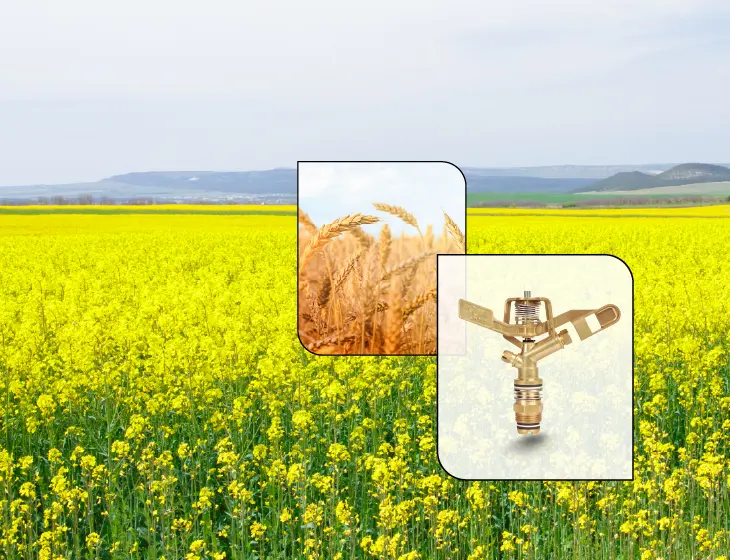
Rabi season puts a clear demand on irrigation. Wheat and mustard grow best when moisture is steady and well timed, yet water use has to stay efficient. With changing weather and expanding fields, the method we use for irrigation matters more than ever. That is why many farmers are again looking at brass sprinklers as a dependable part of their Rabi routine.
The soil stays cool for long hours in this season, evaporation drops, and the crop relies almost fully on planned watering. A good irrigation system helps keep that balance and avoids the dry or soggy patches common with older methods. Sprinklers have become a practical choice because the water distribution is gentle and even across the field.
Why Metal Based Sprinklers Fit This Season Well ?
A Brass sprinkler tends to perform steadily across many cycles of use. Brass doesn’t give in easily to wear, and that matters a lot in fields where conditions keep changing. The weather can be cold in the morning and warm by afternoon, water pressure can dip or rise, and lines may need to be shifted from plot to plot. Metal holds up to all of that. Many farmers choose it simply because they want something that behaves the same way every time they open the line.
Uniform watering is another big benefit. With wheat irrigation, even moisture often results in better tillering and a field that matures together rather than in patches. Mustard crop watering also follows a similar idea. Mustard is happy with moderate but regular moisture. When the water is spread evenly, the plant handles the season with less stress, especially around flowering and seed setting.
The Role of Brass Impact Sprinklers in Rabi Irrigation
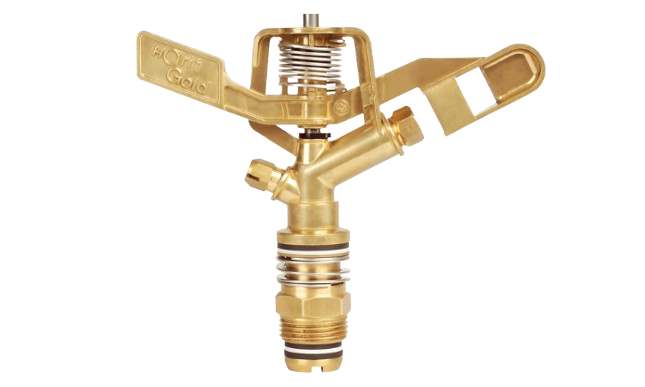
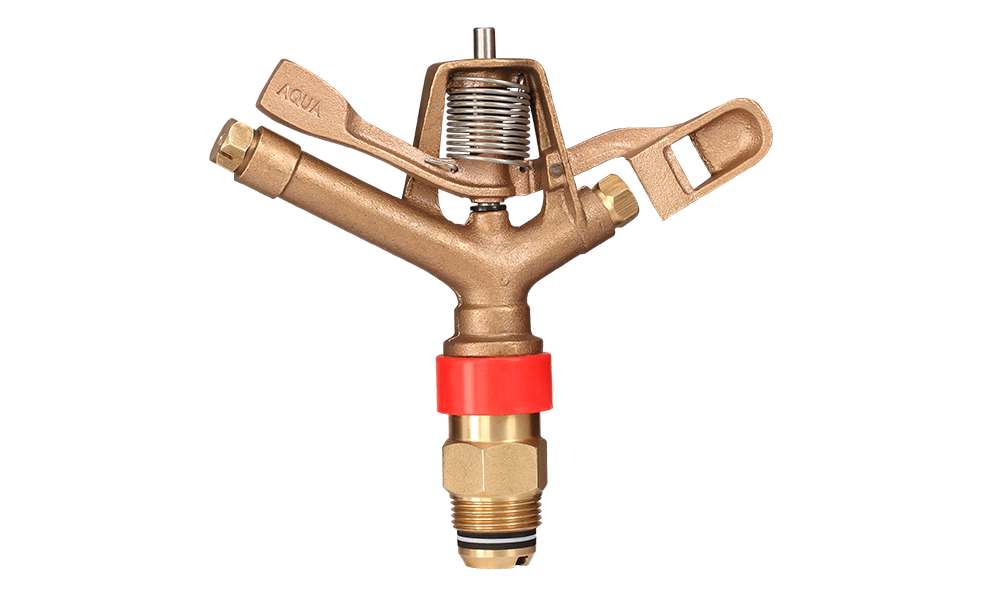
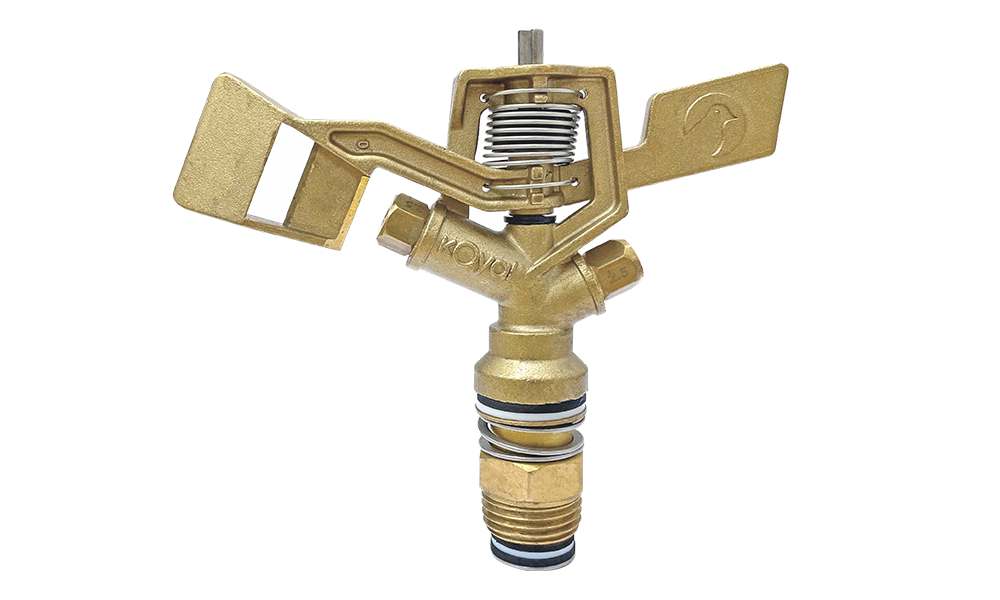
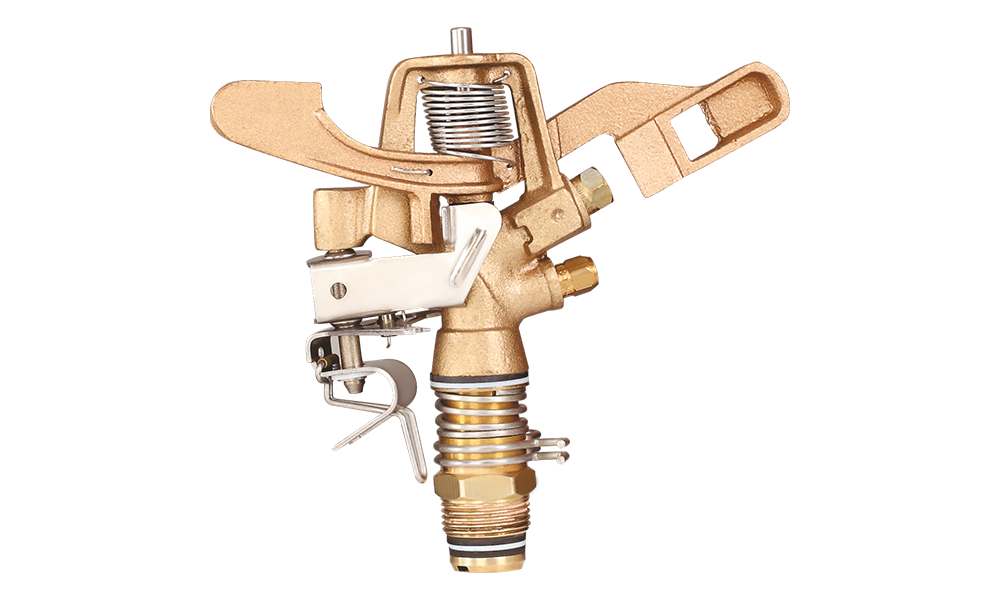
Impact sprinklers work well for Rabi because the rotation comes from the water force itself, so there is no complicated mechanism to maintain. At Automat, we design impact sprinklers with long term use in mind. No two farms work the same way, so the sprinklers are made in different materials. You will find brass, bronze, aluminium, and polymer options, and each one fits a slightly different kind of field setup. The idea is to give options that fit different field conditions, while making sure that each one still delivers a uniform spray pattern at both high and low pressures.
The HT 5DN is one example many growers use for solid set layouts. The heavy duty brass body and arm make it dependable when you need something that can stay in the field for weeks. It is commonly used for row crops such as carrot, radish, potato, and tomato, and works well in general field applications too. With a recommended pressure range of 1.0 to 3.0 kg per square centimeter and a radius of about 12.5 meters, it fits medium sized plots comfortably.
Edges of fields often need different handling. The HT 05PC is a part circle model that lets you direct water where you want it without wasting spray outside the boundary. Its bronze body and Zamac arm make it sturdy, and the deflector plate allows you to adjust the spray height. The diffusor screw lets you fine tune the droplet size based on soil type. Recommended pressure lies between 2.0 and 4.0 kg per square centimeter, and spacing is up to 8 meters.
When fields get larger, many growers move to the HT 20G. It covers more ground without needing too many sprinklers, and the brass body holds up well with regular use. Farmers like that the spray stays steady even when pressure drops a bit. It’s used in fields growing sugarcane, watermelon, bajra, maize, wheat, tea, and coffee, and it covers around 13 meters comfortably.
The HT 20 tends to be preferred in windy zones, since the bronze body keeps the sprinkler steady and the spray stays more consistent. It works well for crops like watermelon, bajra, maize, wheat, and cotton and performs smoothly between 1.0 and 3.0 kg per square centimeter.
Field edges usually need a bit of extra attention, and that is where the HT 20PC comes in handy. Since it is a part circle model, you can set it to water only the area you want without losing spray outside the boundary. The bronze body keeps it sturdy in regular use, and the adjustable parts make it easy to fine tune based on the layout. It works comfortably in the 2.0 to 4.0 kg per square centimeter range, and most farmers place it at around 15 meters when they want good, even coverage along the sides.
Fields that experience frequent movement of HDPE lines often need sprinklers that can handle being shifted again and again. The HT 20PH, built with a brass body and nozzles, suits this use. It is often used on fields growing groundnut, jowar, paddy, and vegetables. One practical advantage is that it continues to work steadily even when the water pressure on the farm is on the lower side.
Many farmers use the HT 25 when their plots need a bit more reach between lines. It handles crops like wheat, bajra, millet, cotton, and pulses quite well, and in a standard setup you can place it roughly 18 meters apart and still get good coverage.
When the field stretches out a little wider, many farmers move to the HT 30 or HT 30B. These two handle bigger areas quite well and stay steady even when the system runs for long hours. They are commonly used for crops like cumin, wheat, mustard, and garlic. What farmers usually appreciate is that each unit can cover close to 21 meters, so you don’t have to place sprinklers too close together. It makes the setup simpler and works nicely in fields that depend mainly on overhead irrigation.
Why Brass Sprinklers Remain Useful Season After Season ?
The Brass sprinkler advantages become clear after a few seasons. The spray pattern stays consistent, the rotation holds steady, and the throw doesn’t shift much with time. That reliability matters in Rabi, when irrigation windows are tight and every round needs to run smoothly.
It also helps keep the field evenly moist, since its rotation stays stable once the pressure is right. Farmers often find they spend less time adjusting lines or correcting uneven patches.
At Automat, we keep the field realities in mind while designing our products, so the tools feel dependable when farmers put them to everyday use.
Conclusion
Rabi crops grow better when water is applied evenly and at the right time. A well planned sprinkler in a Rabi crop irrigation system makes it easier to keep wheat and mustard fields properly watered without stretching your water supply. When the tools are reliable and sized well for the land, they make the whole season easier to manage.
FAQs
How long do brass sprinkler valves last?
With normal field use and basic care, brass valves often last several seasons because the material holds up well against pressure changes and outdoor conditions.
How to adjust a brass impact sprinkler?
You can fine tune the spray by turning the diffusor screw for droplet size and shifting the deflector plate or trip collars to set the arc and throw.
How much area does one brass sprinkler cover?
Coverage depends on the model and pressure, but most brass sprinklers used in Rabi fields comfortably reach between 12 and 21 meters.
Are brass sprinklers good for all Rabi crops?
Yes, they work well for most Rabi crops because they deliver steady, even moisture that suits wheat, mustard, and other winter season fields.
What is the average lifespan of a brass sprinkler?
Farmers generally get many years of use from a brass unit, since the material resists wear and maintains consistent performance over time.

Download Mobile App


Get in touch

Plot no. 18-19, Dilshad Garden, G.T. Road, New Delhi 110095.


