
Popular Searches
Popular Searches

How Do 3/4-Inch Sprinklers Affect Water Distribution in Wheat and Gram Irrigation?
Getting water across a field is one thing; making sure it reaches the different areas evenly is another. With 3/4-inch sprinklers, the result depends on more than just the sprinkler itself.
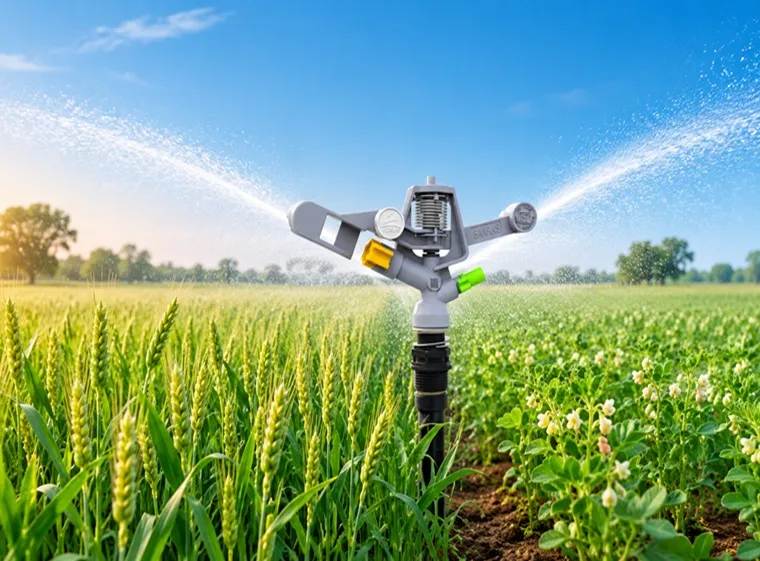
Getting water across a field is one thing; making sure it reaches the different areas evenly is another. With 3/4-inch sprinklers, the result depends on more than just the sprinkler itself. Water pressure, the distance between sprinklers and the area each one covers all have a part to play. And when it comes to wheat and gram, the field conditions and the crop's irrigation needs matter just as much. So, what should farmers look at when choosing a sprinkler for these crops?
Why does sprinkler size matter for water distribution?
A sprinkler's size can tell us something about its connection, but it doesn't tell the whole story. The distance water travels, the amount discharged and the pattern in which it falls depend on the sprinkler design and the pressure at which it operates.
A 3/4 inch sprinkler may have a different coverage area and pressure requirement from another model with the same connection size. This is why looking at the product specifications is more useful than making a choice based on size alone.
Spacing deserves equal attention. But if the sprinklers are farther apart, then the sprinklers won't wet as much of the field of areas getting less water. The recommended spacing for the particular model provides a starting point for planning the layout.
What should be considered for wheat irrigation?
Wheat is among the crops for which overhead sprinkler irrigation is listed across several of Automat's models. One such option is Saaras HT-46, a plastic sprinkler recommended for wheat, maize, peas, cumin, cotton and vegetables.
For sprinkler irrigation in wheat, its specifications offer some useful details. Saaras has a 3/4-inch BSP male or female threaded connection, a recommended pressure range of 1.0 to 4.0 kg/cm² and a coverage radius of 12 metres. Its trajectory angle is 23 degrees, and it can be used on portable as well as solid-set systems.
These figures are useful when deciding where to position the sprinklers. However, a 12-metre radius does not mean that every point within that area will receive exactly the same amount of water. The spacing between units and the pressure available during operation also influence the final distribution.
And what about gram cultivation?
Gram is specifically included among the recommended crops for Garud HT-20CS(XR). The model is also listed for peas, pulses and other farming crops.
For sprinkler irrigation for gram, Garud is worth looking at because of its stated operating range and spacing recommendations. It has a 3/4-inch connection, operates within a recommended pressure range of 0.5 to 3.0 kg/cm² and has a coverage radius of 13 metres. The recommended spacing is up to 12 metres for higher distribution uniformity.
There are some interesting details in its construction, too. Garud has a sand-cast aluminium body and arm, heavy-duty brass nut and nozzles, and a stainless-steel tube designed to reduce frictional water flow. A special PU pad is included to limit wear at the impact area.
These features describe the construction of the sprinkler, while its pressure and spacing specifications help with planning the installation. Both are worth considering when choosing equipment for a field.
A closer look at Saaras, Garud and Harit Gold
Although all three are used for overhead irrigation, their listed crop applications and specifications are different.
Saaras HT-46: A plastic sprinkler recommended for wheat, maize, peas, cumin, cotton and vegetables. It has a 12-metre coverage radius and a recommended operating pressure range of 1.0 to 4.0 kg/cm².
Garud HT-20CS(XR): Listed for gram, peas, pulses and other crops. It has a 13-metre coverage radius, recommended spacing of up to 12 metres and a pressure range of 0.5 to 3.0 kg/cm².
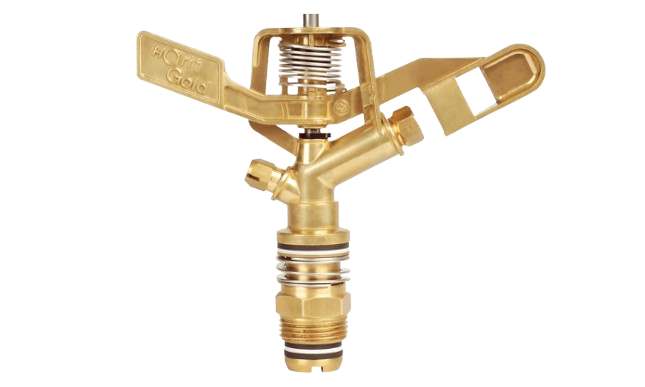
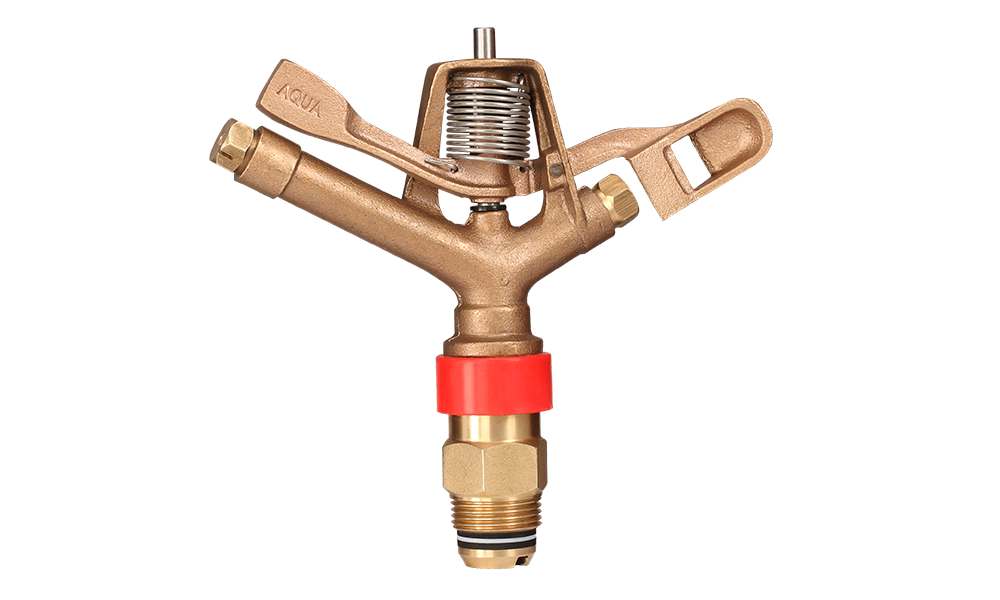
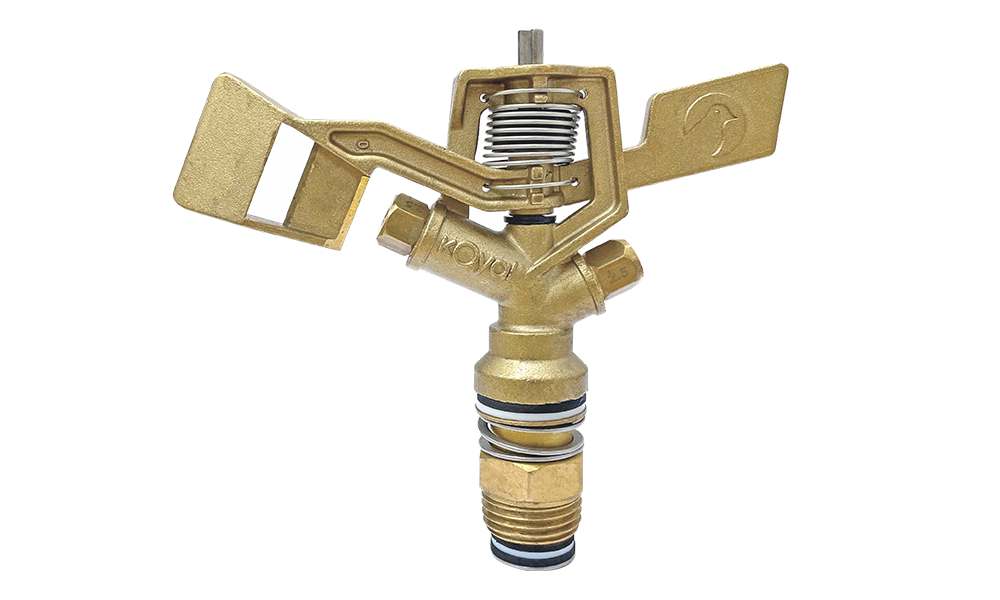
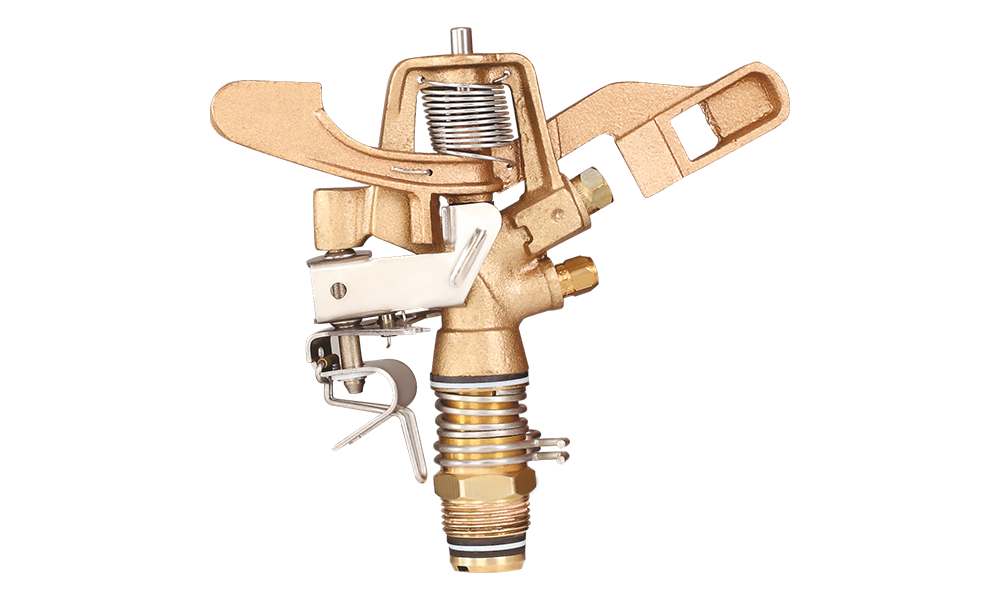
Harit Gold HT-20G: A bronze-bodied sprinkler listed for wheat, maize, bajra, watermelon, sugarcane, tea and coffee. It has a 3/4-inch connection, a trajectory angle of 27 degrees and a coverage radius of 13 metres. Its product specifications also highlight uniform water distribution at low pressure.
At Automat, we offer these models for different irrigation requirements. The choice depends on the crop, the available water pressure and the arrangement of the field. A model with a larger coverage radius is not automatically the better option if its other requirements do not suit the installation.
Why does sprinkler spacing deserve attention?
Even a well-designed sprinkler needs to be positioned correctly. The distance between sprinklers determines how much their wetted areas overlap and how consistently the field receives water.
A water sprinkler system should be planned using the recommendations for the selected model. Garud, for instance, has a recommended spacing of up to 12 metres for higher distribution uniformity. Saaras has a coverage radius of 12 metres, while Harit Gold has a radius of 13 metres. These figures describe the individual products and should not be mistaken for identical spacing recommendations.
Pressure is another part of the picture. If the system cannot maintain the required pressure, the sprinkler may not deliver its intended distribution pattern. Checking the available pressure across the field is therefore just as important as deciding where to install each unit.
What should farmers look at before buying?
It is easy to begin a comparison with the price, but the specifications deserve a look first. A sprinkler should suit the crop, connection arrangement and operating conditions of the field.
When comparing the sprinkler irrigation system price in India, consider the complete installation rather than just the cost of an individual sprinkler. The equipment required will depend on the layout and irrigation needs of the field. A lower purchase price may not be useful if the selected model is unsuitable for the intended application.
A 3/4 inch sprinkler should therefore be assessed on more than its connection size. Its recommended pressure, coverage and spacing all need to make sense for the proposed arrangement.
Getting the distribution right
Saaras and Harit Gold are listed for wheat, while Garud includes gram among its recommended crop applications. Their specifications differ, so there is no reason to assume that one model will suit every field.
At Automat, we focus on irrigation equipment that supports efficient water use and uniform distribution. For farmers considering a 3/4 inch sprinkler, checking the crop application alongside pressure, coverage and spacing is a sensible way to begin. The right choice ultimately depends on the actual irrigation requirements of the field.
FAQs
What is the ideal spacing for 3/4-inch sprinklers?
It depends on the sprinkler model and its recommended coverage. For example, Garud recommends spacing of up to 12 metres for higher distribution uniformity.
How much water does wheat need under sprinkler irrigation?
Water requirements of crops depend on crop stages and soil type and climatic conditions. The irrigation schedule should be planned around the field's actual moisture needs.
Is sprinkler irrigation suitable for gram cultivation?
Gram can be grown by sprinkler irrigation. Automat’s Garud HT-20CS(XR) is specifically listed for gram and other pulse crops.
How do sprinklers improve application efficiency?
They have no normal surface flow to irrigate the field. With proper pressure and spacing you will have even coverage and less patchy application.
What factors should be considered when selecting a plastic sprinkler?
Look at crop suitability, operating pressure, coverage radius, spacing and connection size. Finally, consider durability and ease of cleaning.

Download Mobile App


Get in touch

Plot no. 18-19, Dilshad Garden, G.T. Road, New Delhi 110095.


