
Popular Searches
Popular Searches

Rain Gun Irrigation System Benefits, Uses and What to Expect on Cost
A rain gun doesn’t behave like the smaller sprinklers most people are used to. The moment it starts, you can tell it’s built for something bigger.
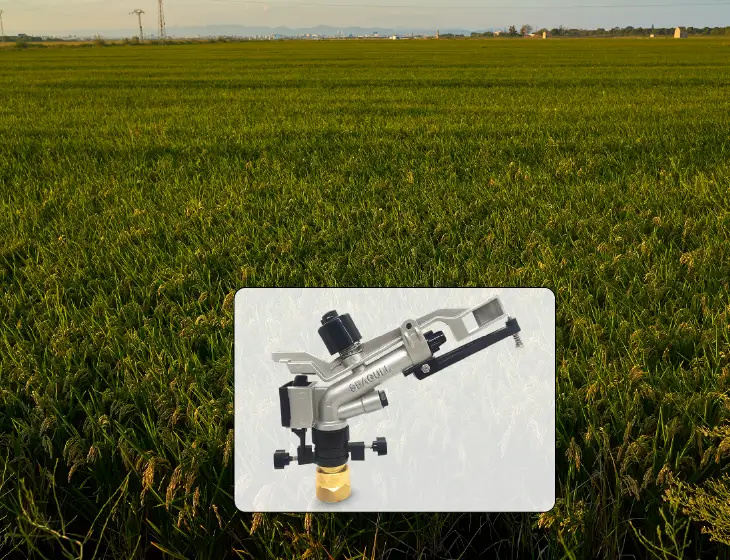
A rain gun doesn’t behave like the smaller sprinklers most people are used to. The moment it starts, you can tell it’s built for something bigger. The water travels farther, lands with more force, and covers a wider stretch in one go. Rain guns aren’t directly comparable to standard sprinklers as they’re built for a different scale.
That difference matters more than it first appears.
In larger, open fields, managing irrigation with multiple small units can start feeling like too much work. That’s usually when farmers begin looking at options like a rain gun irrigation system, as it fits the scale more naturally.
When A Rain Gun Starts Making Sense
Not every field needs it.
A rain gun irrigation system is designed for situations where water needs to be spread across a larger area with fewer setups. It is commonly used in open fields, during initial stages of sowing when uniform moisture is required across the soil surface, and in crops where wider spacing or taller growth makes overhead reach more practical.
In smaller plots, closely spaced sprinklers do the job just fine. But in larger fields, especially during early crop stages or when covering open land, rain guns help spread water more efficiently without adding too many connection points.
A rain gun works differently here. Instead of spreading out multiple units, one setup can handle a much larger area.
It reduces the number of points you need to manage, and that alone makes irrigation easier to handle over time.
Rain Gun And Field Coverage
In impact rain gun agriculture setups, the focus is not on gentle watering but on reach and consistency across distance.
The mechanism is simple. Water flows through at higher pressure, which drives the rotation and pushes the stream outward. That movement allows the sprinkler to cover a wide radius without needing constant adjustment.
For crops like maize, wheat, or fodder, and other taller crops where spacing is wide and uniform coverage matters more than precision at each plant, this kind of setup fits naturally.
Also Read: Why Rain Guns Work Well for High-Density Fodder Crops ?
How the system works in practice ?
It’s actually quite simple once you see it in action. Water comes in through the line and shoots out with enough force to make the gun rotate on its own, spreading water across the field as it moves. You can let it go full circle or adjust it to cover just a part of the area, depending on how your field is laid out.
Once the pressure is set correctly, the system usually runs on its own without needing much interference. That steady operation is what makes a rain gun irrigation system reliable during long irrigation hours.
Automation and ease of use
In larger farms, manual operation can become time-consuming.
An automatic rain gun irrigation system helps reduce that effort. With controllers and valves in place, irrigation can run on its own schedule without needing someone to start or stop it each time.
This becomes especially useful during peak seasons when there are already too many things to manage.
It doesn’t remove the need to check the field, but it does reduce how often you need to step in.
Rain guns in Mauritius
In places like Mauritius, farms aren’t always laid out in a straight, uniform way, so flexibility matters. That’s where rain gun irrigation Mauritius setups tend to fit in, since they can cover larger areas without needing too many units spread out everywhere. It just makes things a bit easier to handle, especially when the field isn’t laid out in a neat, even way.
Libya and water delivery needs
In places like Libya, where fields are often large and water isn’t always easy to manage, farmers usually go for setups that can cover more ground in one go. A high volume rain gun Libya setup works well here because one unit can handle a bigger area, so you don’t have to install too many across the field. The water also travels farther, which makes the whole setup a bit simpler to manage day to day.
Understanding rain gun price in real terms
Rain gun price isn’t really one fixed number. It changes depending on the size, build, and how much area you’re trying to cover. Bigger units usually cost more, which is expected.
But most farmers don’t look at it that way alone. They also think about how many smaller sprinklers they won’t need anymore and how much time it saves. When you look at it like that, it often balances out over time.
South Africa and local considerations
In places like South Africa, the rain gun price South Africa isn’t always fixed and can shift depending on what’s available and what kind of setup you’re going for.
Most farmers don’t just look at the price though. They also think about how well it will hold up in their conditions. Since these systems run for long hours and deal with strong pressure, durability ends up mattering just as much.
When it may not be the best fit
It’s not meant for every situation.
For crops that need a lighter or more controlled kind of watering, smaller sprinklers or drip setups usually make more sense. A rain gun irrigation system, on the other hand, works better in open fields where the goal is to cover more ground quickly rather than focus on each plant. Knowing when to use which one just saves you from setting up something that doesn’t really suit the crop.
How we approach rain gun irrigation systems ?
At Automat Global, the focus stays on how systems actually perform once they are out in the field.
A rain gun irrigation system should be able to handle long hours, changing pressure, and outdoor conditions without becoming difficult to manage.
The idea is simple. Cover more area, keep the movement steady, and avoid making the system complicated.
When that balance is right, irrigation becomes something that runs in the background instead of something that needs constant attention.
Conclusion
As fields grow larger, irrigation needs change with them.
What works in smaller plots does not always scale up easily. That’s where a rain gun irrigation system starts to make sense.
It covers more ground, reduces the number of components, and keeps the process manageable.
Over time, that difference shows up not just in how the system runs, but in how evenly the field is irrigated across the season.
FAQs
What crops are ideal for rain gun irrigation in South Africa?
Mostly crops like maize, wheat, sugarcane, and fodder. They suit larger fields where you’re trying to cover more ground at once.
How much area does one rain gun typically cover?
Depends on the model and pressure, but in most cases, one can handle a pretty wide stretch, so you don’t need too many units.
What pressure and flow rate do rain guns require?
They usually run well when the pressure is decent enough to keep the gun moving properly and push the water out far enough. As long as the flow isn’t fluctuating too much, it just keeps going without much trouble.
How do rain guns compare to drip systems in water usage?
Drip puts water exactly where it’s needed, so it uses less. Rain guns cover a lot more ground in one go, but that usually means using more water overall.
How to reduce wind drift issues with rain gun setups?
Running them early morning or later in the day helps, and small adjustments in setup can keep the spray from drifting too much.

Download Mobile App


Get in touch

Plot no. 18-19, Dilshad Garden, G.T. Road, New Delhi 110095.


