
Popular Searches
Popular Searches

Why Rain Gun Irrigation is Popular in Africa, Middle East & South America
Irrigation choices are rarely made in ideal conditions. They’re shaped by water availability, farm size, labour access, pressure conditions, and how quickly a system can cover ground. That’s a big reason rain gun systems have become common across many parts of the world.
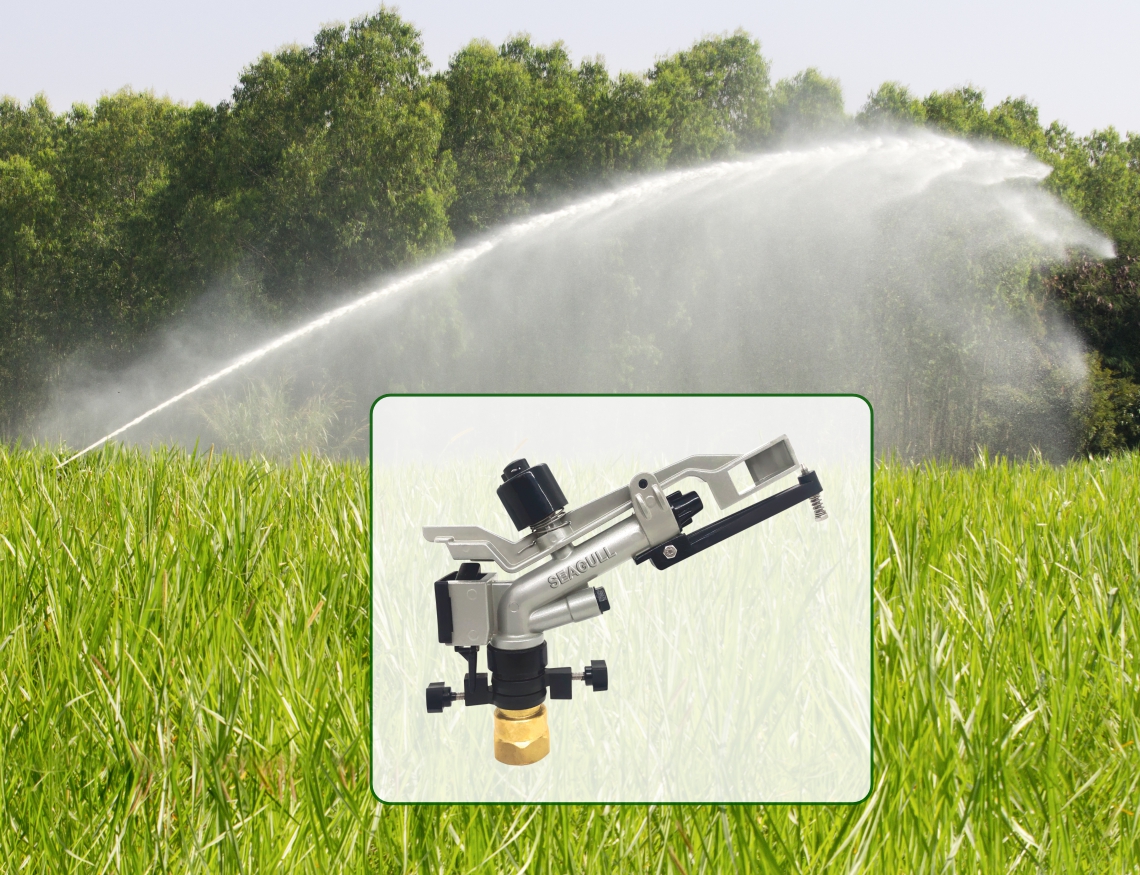
Across parts of Africa, the Middle East, and South America, farms often stretch over large open areas where irrigation has to work practically, not perfectly. In many places, growers need something that can handle long operating hours, changing field conditions, and wide coverage without turning into a full-time maintenance job.
A rain gun irrigation system fits into that kind of farming quite naturally. It covers more land with fewer sprinkler points, which makes the entire setup easier to handle over time.
Large fields change the way irrigation is planned
Irrigation layouts look very different once farm size increases.
On smaller plots, closely spaced sprinklers may still feel manageable. But across large farms, more sprinklers also mean more pipework, more joints, more pressure variation, and more time spent checking everything.
Large area coverage irrigation has become common in many farming regions across Africa and South America for exactly this reason. Farmers can irrigate wider sections without filling the field with too many sprinkler points. The layout stays simpler, and daily operation becomes easier to manage during busy seasons.
Rain gun sprinkler systems suit open conditions better
Open land behaves differently during irrigation. Wind movement is stronger, pressure shifts are more noticeable, and water has to travel farther before reaching the crop properly. Smaller sprinklers often struggle once the spacing becomes too wide.
A rain gun sprinkler usually makes more sense once the field gets too wide for smaller sprinklers to handle comfortably. Water needs to reach farther without the coverage breaking unevenly halfway through. Farmers using models like the AQ-30G, AQ-40G, and AQ-42G generally prefer them because they can handle bigger sections without needing too many sprinkler points spread across the field.
Systems like this are especially useful in crops like maize, wheat, sugarcane, fodder crops, cotton, and plantation farming where growers need broader coverage without constantly rearranging the setup.
Mobility matters more than people expect
Many farms do not keep the same layout throughout the year.
Crop rotation changes the field arrangement, some sections need more irrigation than others, and temporary setups are fairly common in certain regions. Farmers usually prefer systems that can move along with those changes instead of needing permanent infrastructure everywhere.
A Portable rain gun system works well in these situations because the units can be shifted between sections without much difficulty. It saves time, especially where labour availability changes through the season or where farms expand gradually over time.
Pressure conditions are not always stable
Water pressure in large agricultural fields rarely stays perfectly consistent. Some parts of the field naturally get better pressure than others. The section closer to the pump may run stronger, while the far end feels slightly weaker once multiple lines start operating together.
Good rain guns are expected to handle those small changes without suddenly affecting the spread too much. A high pressure rain gun is especially useful in large open fields because it can still throw water across wider distances even when conditions are not perfectly steady. And in places where pumping water already takes a lot of energy, systems that can work properly even at lower pressure become much easier to manage in the long run.
Rain gun irrigation works across many crop types
Rain gun irrigation continues growing in popularity because it adapts easily to different kinds of farming. The same setup can often be used across cereals, vegetables, fodder crops, plantations, and horticulture with only small adjustments in spacing or nozzle selection.
In South America, rain guns are widely used across large grain and fodder fields. In parts of Africa, they support sugarcane and open vegetable cultivation. Across the Middle East, wider coverage systems help farmers irrigate quickly before water loss from heat and evaporation starts increasing during the day.
Many growers prefer a rain gun irrigation system because they do not have to redesign the entire irrigation setup every season as crops or field layouts change.
Farmers usually look beyond the rain gun price list
Most growers do not decide based only on the initial rain gun price list.
They usually think about how much land one unit can handle, how much labour it saves, and how often repairs are likely to come up later. A system that covers more area while needing fewer adjustments often becomes more practical over several seasons, even if the starting cost looks slightly higher.
This matters even more in regions where irrigation directly affects crop survival during long dry periods.
Durability matters in harsh outdoor conditions
Irrigation systems in these regions are expected to keep running for long hours, often in heat, dust, and rough field conditions. If equipment starts demanding constant repairs midway through the season, farmers usually move away from it pretty quickly.
Rain guns are commonly built using aluminium die-cast bodies, brass components, stainless steel hardware, and engineering-grade plastic parts. Farmers mainly expect one thing from the setup. It should keep running steadily without becoming unpredictable after a short period of use.
How we approach rain gun irrigation system design ?
At Automat, the focus stays on how systems actually behave in field conditions rather than only how they look on paper.
The aim is steady coverage, smooth rotation, durable construction, and practical operation during long irrigation hours. Different rain gun models are developed for different field sizes and pressure conditions so growers can choose something that fits the way their farm actually operates.
Most farmers prefer equipment that keeps running properly without needing attention every few days.
Conclusion
The popularity of rain gun systems across Africa, the Middle East, and South America comes down to practical farming needs. Large fields, changing water conditions, labour limitations, and the need for faster irrigation all push growers toward systems that can cover more ground without becoming difficult to manage.
For many growers, a rain gun irrigation system simply makes large-scale irrigation easier to handle. The layout stays cleaner, coverage becomes faster, and the system does not need constant shifting across the field. Over time, farmers usually stick with systems that reduce effort while continuing to work reliably season after season.

Download Mobile App


Get in touch

Plot no. 18-19, Dilshad Garden, G.T. Road, New Delhi 110095.


