
Popular Searches
Popular Searches

Long-Term Benefits of Investing in Plastic Irrigation Systems
A lot of farmers don’t really think in terms of “short-term” or “long-term” when buying irrigation equipment. The thinking is usually simpler than that. Will this keep working properly after a few seasons, or will it start creating extra work?
A lot of farmers don’t really think in terms of “short-term” or “long-term” when buying irrigation equipment. The thinking is usually simpler than that. Will this keep working properly after a few seasons, or will it start creating extra work?
That question matters because irrigation systems are not something you install once and keep replacing every year. Once they are in the field, they become part of the routine. And over time, the small differences between materials start becoming very noticeable.
That’s one reason plastic systems have become so common across different kinds of farming setups. Not because they look modern, but because they tend to stay practical for longer.
Why plastic irrigation system setups became more common ?
Earlier, many farmers were unsure about using plastic-based components across larger setups. The assumption was that heavier materials automatically meant better durability. But field experience slowly changed that thinking.
A properly designed plastic irrigation system handles regular agricultural use surprisingly well. It stays easier to manage, resists corrosion, and usually needs less maintenance through the season. Over time, that convenience starts affecting everyday work more than people expect.
Lighter systems are easier to work with
You notice it mostly during everyday work. Moving lines, adjusting the setup, or carrying pipes across the field just becomes easier when everything isn’t so heavy.
That is where Lightweight irrigation pipes make a practical difference. They reduce the physical effort involved during installation and seasonal movement, especially in portable systems where lines are shifted regularly. It may sound like a small advantage at first, but during long irrigation cycles, small conveniences matter a lot.
Plastic impact sprinklers continue to stay in use for a reason
There’s a reason these sprinklers are still widely used across open fields, nurseries, and vegetable crops.
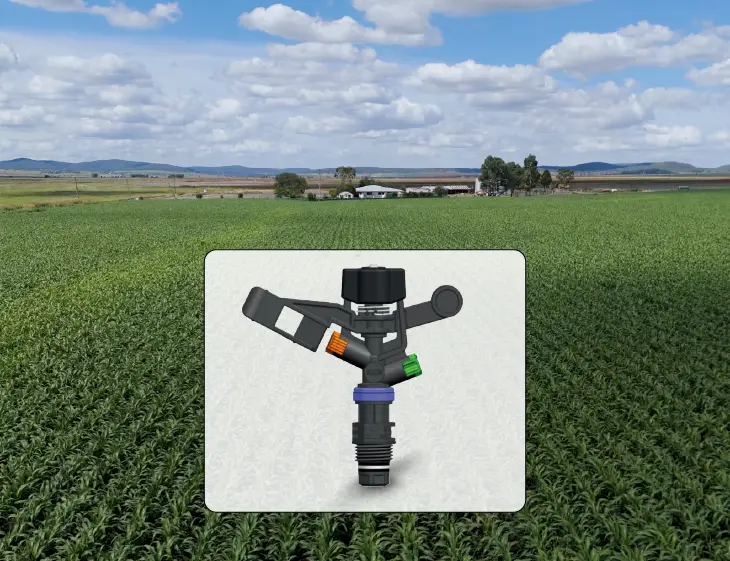
Plastic impact sprinklers are designed to handle long operating hours without demanding constant attention. They rotate steadily, maintain fairly even water spread, and continue working even when field conditions are not perfectly ideal. In actual farming conditions, that reliability matters more than complicated features.
At Automat Global, this has been a major focus while developing plastic sprinkler ranges for different crop and spacing requirements. The idea has always been to keep irrigation practical in the field, not just efficient on paper.
Corrosion becomes less of a problem over time
Water quality changes from one place to another. Some areas deal with mineral-heavy water, while others regularly use fertilizers through the irrigation line. Over time, these things start affecting equipment.
Plastic materials generally handle this exposure better because they don’t react the same way metal components often do. Because of that, the system usually keeps behaving the same way season after season instead of slowly developing small problems from rust or wear. It also means fewer interruptions during irrigation cycles, especially when the system is running regularly through peak crop stages.
Where hdpe pipe uv resistance starts mattering
Pipes stay exposed to sunlight for long periods in most agricultural setups. And after months of heat and outdoor exposure, weaker materials usually begin showing signs of wear.
That’s why hdpe pipe uv resistance becomes important in long-term field use. Pipes built to tolerate outdoor conditions tend to hold their structure better through changing weather and continuous exposure. Farmers may not notice this immediately in the first season, but over years, it affects how often replacements become necessary.
Plastic impact sprinklers help simplify maintenance
No irrigation setup is completely maintenance free. But some systems definitely ask for less attention than others.
Plastic impact sprinklers are generally easier to clean, lighter to handle, and simpler to service during field operation. Features like bayonet nozzle connections and colour-coded nozzles also make field adjustments quicker, especially when multiple sprinklers are being used together. That matters during busy irrigation periods when nobody wants to spend unnecessary time dismantling parts just to restart the system.
Consistency matters more than maximum performance
Most farmers are not looking for the “most advanced” irrigation setup possible. What they usually want is something that behaves the same way every time the system runs.
A stable irrigation system keeps water distribution more predictable across the field. Once the pressure and spacing are properly adjusted, farmers expect the setup to continue operating without needing constant correction. That consistency is one of the main reasons plastic-based systems have continued gaining acceptance across different farm sizes.
Different crops need flexible setups
No single irrigation layout works perfectly for every crop. Vegetables, nursery crops, fodder, cereals, and fruit plantations all behave differently when it comes to water application.
That flexibility becomes easier when systems can adapt without major structural changes. Many farmers now combine different layouts within the same field, sometimes using a drip and sprinkler system together depending on spacing, crop stage, or water availability. Plastic systems make those adjustments easier because components are simpler to move, expand, or rearrange when needed.
Long-term costs are not only about purchase price
The actual expense of irrigation doesn’t stop after installation. Over the years, maintenance, replacements, downtime, and labour start becoming part of the total cost as well.
That is where Plastic irrigation ROI starts becoming easier to understand. A system that keeps running steadily with fewer repairs often becomes more economical over time, even if the initial investment feels slightly higher. Farmers usually notice this gradually through fewer damaged parts, less seasonal replacement, and fewer interruptions during irrigation.
How this shows up in everyday farming ?
Most long-term benefits don’t appear dramatically. They show up in smaller ways.
The system keeps running without frequent breakdowns. Plastic impact sprinklers continue rotating properly. Moving the pipes around between seasons also feels less like heavy work. Maintenance stops taking up unnecessary time. At Automat, this practical side of irrigation has always shaped how systems are designed. The focus stays on durability, ease of handling, and keeping irrigation dependable under actual field conditions rather than ideal ones.
Bringing it all together
The value of an irrigation system usually becomes clearer after a few seasons, not during installation. That’s when farmers begin noticing whether the setup is becoming easier to manage or slowly turning into extra work.
Plastic systems continue to stay popular because, in many cases, they quietly reduce those day-to-day complications. The system feels lighter to operate, easier to maintain, and more stable through changing conditions.
Conclusion
Long-term irrigation decisions are rarely about choosing what looks best initially. They are usually about choosing what continues working without creating constant problems later.
That’s why plastic impact sprinklers and plastic-based irrigation setups remain widely preferred across modern farming. They simplify handling, reduce maintenance pressure, and stay practical through regular field use. And over time, that reliability becomes more valuable than almost anything else in the system.

Download Mobile App


Get in touch

Plot no. 18-19, Dilshad Garden, G.T. Road, New Delhi 110095.


