
Popular Searches
Popular Searches

The Importance of Plastic Impact Sprinklers in Field Irrigation
Most irrigation issues begin when water stops falling evenly across the field. Wind, pressure changes, or worn sprinklers are usually enough to throw things off track for the farmers.
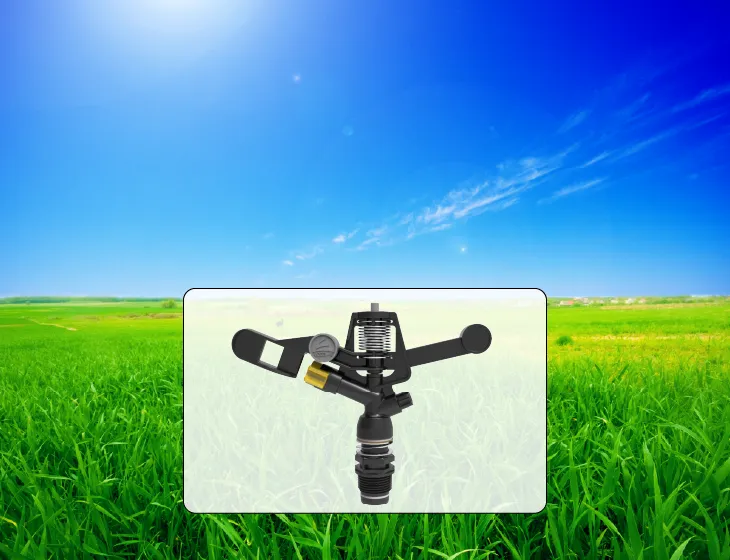
Most irrigation issues begin when water stops falling evenly across the field. Wind, pressure changes, or worn sprinklers are usually enough to throw things off track for the farmers. Plastic impact sprinklers are widely used because they rotate steadily, cover the field evenly, and continue to work reliably over long periods of regular use.
Over time, that kind of reliability becomes more important than small design differences, which is why impact-based plastic sprinklers remain common in overhead irrigation.
Why consistency matters in field irrigation ?
Water distribution does not need to be complex to be effective, but it does need to be even. When spray patterns vary too much, crops start showing uneven growth, especially during germination or early vegetative stages. Once dry or overwatered patches appear, correcting them mid-season becomes difficult.
A plastic water sprinkler is often chosen here because it combines steady performance with materials that tolerate outdoor exposure well. High-impact plastic resists corrosion from fertilizers and handles prolonged sunlight without degrading quickly. Because of this, farmers usually don’t have to change parts as often, and the setup stays the same for most of the season.
How impact rotation supports uniform coverage ?
Impact sprinklers rotate using a mechanical arm that strikes the water stream. This simple mechanism spreads water across a defined radius and keeps moving even when pressure varies slightly. In real field layouts, pressure differences along the line are common, and this design helps maintain coverage without interruption.
Plastic impact sprinklers are built so this rotation remains smooth instead of sticking or slowing down. Once the pressure is set correctly, the sprinkler continues working on its own, without needing frequent checks.
Plastic impact sprinkler water usage in daily operation
Managing plastic impact sprinkler water usage is mainly about achieving uniform delivery rather than limiting flow. Even coverage means water goes where it is needed instead of running off. Farmers tend to notice this more during short runs or early germination.
Models such as the AQ-22G and AQ-22W are designed to operate within defined pressure and flow ranges. That consistency helps farmers plan their irrigation without constantly second-guessing the flow.
Suitability across crops and layouts
Not all crops react the same way to overhead watering. Nursery beds and vegetables usually do better with a gentler spray, while open fields need water to carry a bit farther without breaking up too soon. That’s where impact-based plastic sprinklers help, because the nozzles, spacing, and spray angles can be matched to the field layout.
Under tree canopies, low-angle models like the AQ-22LA and AQ-22LAW help keep water closer to the soil instead of sending it into the air. In open plots, sprinklers such as the AQ-22G and AQ-46 are commonly used to cover larger areas. For field edges or uneven shapes, part-circle versions make it easier to direct water only where it’s needed.
Irrigation equipment for small farms
For many growers, especially those managing limited acreage, irrigation equipment for small farms needs to be easy to handle and simple to maintain. Weight becomes a practical concern when lines are moved frequently.
Being lighter makes plastic impact sprinklers easier to handle when layouts change. Over time, they continue to perform reliably across vegetables, pulses, flowers, and nursery crops.
Compatibility within plastic irrigation systems
A sprinkler system plastic layout often includes plastic pipes, fittings, and connectors. Using sprinklers made from similar materials helps reduce stress at joints and keeps the system balanced.
Plastic impact sprinklers work easily with these systems, and because they don’t rust, seasonal changes in water quality usually cause fewer problems.
Flow control and supporting components
How a sprinkler behaves often comes down to what’s happening before the water reaches it. When the flow stays steady, the sprinkler simply works the way it should. A plastic irrigation valve plays an important role by keeping pressure within the recommended range before water reaches the sprinkler.
When pressure stays steady, the sprinkler turns smoothly, the throw stays about the same, and parts don’t wear out as quickly.
Maintenance in real field conditions
No irrigation system is completely maintenance-free, but the aim is to keep routine tasks simple. Plastic impact sprinklers are designed with ease of service in mind. The color-coded bayonet nozzles make it easier to spot the right size and clean it without much effort.
In models like the AQ-22W and AQ-46, upkeep is mostly about checking the nozzles and clearing any debris. When that’s done on time, the system rarely stays down for long, even in busy irrigation periods.
Performance under wind and pressure variation
Wind can change how water lands on the field, especially in open plots. When that happens, spray can drift or break unevenly instead of falling where it should.
Some plastic impact designs use simple stabilizing elements, such as added arm weight or stream-shaping features, to keep the spray more controlled. Sprinklers like the AQ-46 are commonly used in these conditions because they continue to throw water reliably even when the wind picks up.
Seasonal durability of plastic sprinkler designs
Sprinklers are exposed to sun, fertilizer, and changing weather for months at a time. Over seasons, that exposure adds up. High-impact plastic retains its shape in the field and avoids the rust issues associated with metal components.
Because of this, many farmers continue using the same plastic sprinkler layout season after season. Familiar layouts often stay in place, and replacements tend to be needed less often.
How we approach plastic impact sprinkler design ?
At Automat, we think first about how sprinklers behave once they are actually in the field. The focus stays on even water spread, stable rotation, and builds that handle regular use without wearing out quickly.
By offering ranges such as the AQ-22 series, AQ-46, and AQ-30 variants, the aim is to support different crops and field sizes without adding complexity to the irrigation setup.
Conclusion
Field irrigation works best when equipment performs steadily without drawing attention to itself. Plastic impact sprinklers support this by maintaining consistent rotation, dependable coverage, and durability suited to everyday agricultural use.
When selected carefully and operated within recommended limits, they help farmers keep irrigation schedules steady and crops evenly watered through the season. At Automat Global, we build with the kind of field conditions farmers actually deal with every day.
FAQs
How far can an impact plastic sprinkler spray?
Depending on the model, nozzle size, and pressure, most impact plastic sprinklers cover anywhere from about 12 to over 30 meters in diameter.
What are plastic impact sprinklers used for?
They are commonly used for overhead irrigation in open fields, nurseries, vegetables, orchards, and crop germination where even coverage is needed.
Are plastic impact sprinklers durable for outdoor fields?
Yes, they are made from high-impact plastic that handles sun exposure, fertilizers, and regular field use without corroding.
How much area can a plastic impact sprinkler cover?
It varies by model, but a single sprinkler can typically cover a wide circle, which suits larger field blocks.
Are plastic impact sprinklers good for low-pressure systems?
Many models are designed to work reliably at lower pressure ranges, which makes them practical for farms with limited or fluctuating pressure.
Which crops are best for impact sprinkler irrigation?
They work well for crops like vegetables, pulses, cereals, nurseries, and plantation crops that benefit from uniform overhead watering.

Download Mobile App


Get in touch

Plot no. 18-19, Dilshad Garden, G.T. Road, New Delhi 110095.


